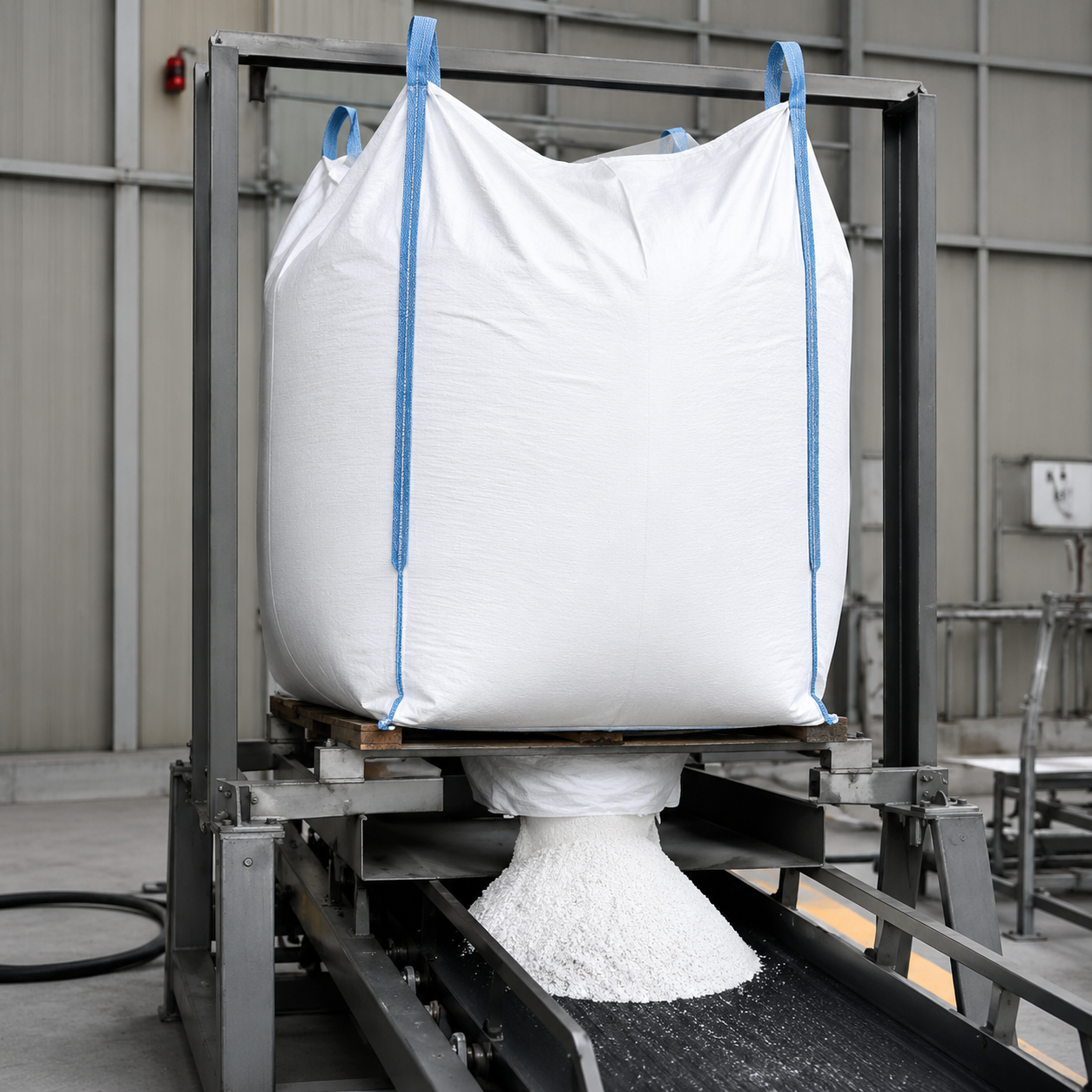
FIBC Bulk Bags for Heavy-Duty Material Packaging
When you need to move large quantities of powder, granules, flakes, or other bulk materials, the right FIBC bulk bag helps you improve loading efficiency, protect the contents, and reduce handling costs.
EHAI Packaging custom FIBC bulk bags with different capacities, fabric weights, lifting structures, filling spouts, discharge outlets, liners, coatings, and printing options. Each bag can be designed around your material, filling equipment, transportation method, and unloading process.
- Load capacity: 500–2,000 kg
- Available with coated or uncoated fabric
- Multiple filling and discharge structures
- Custom sizes, printing, liners, and lifting loops
What are FIBC Bulk Bags?
FIBC bulk bags are used to store and transport large volumes of dry, flowable materials. Compared with small woven sacks or rigid containers, they can reduce packaging, loading, storage, and transportation costs.
With flexible production capabilities, we can customise the bag size, fabric weight, lifting loops, filling and discharge structures, coating, liner, printing, and accessories to match your material and handling process. Each order is produced according to the confirmed specification, with checks on fabric, sewing, dimensions, loop reinforcement, and finished-bag quality.
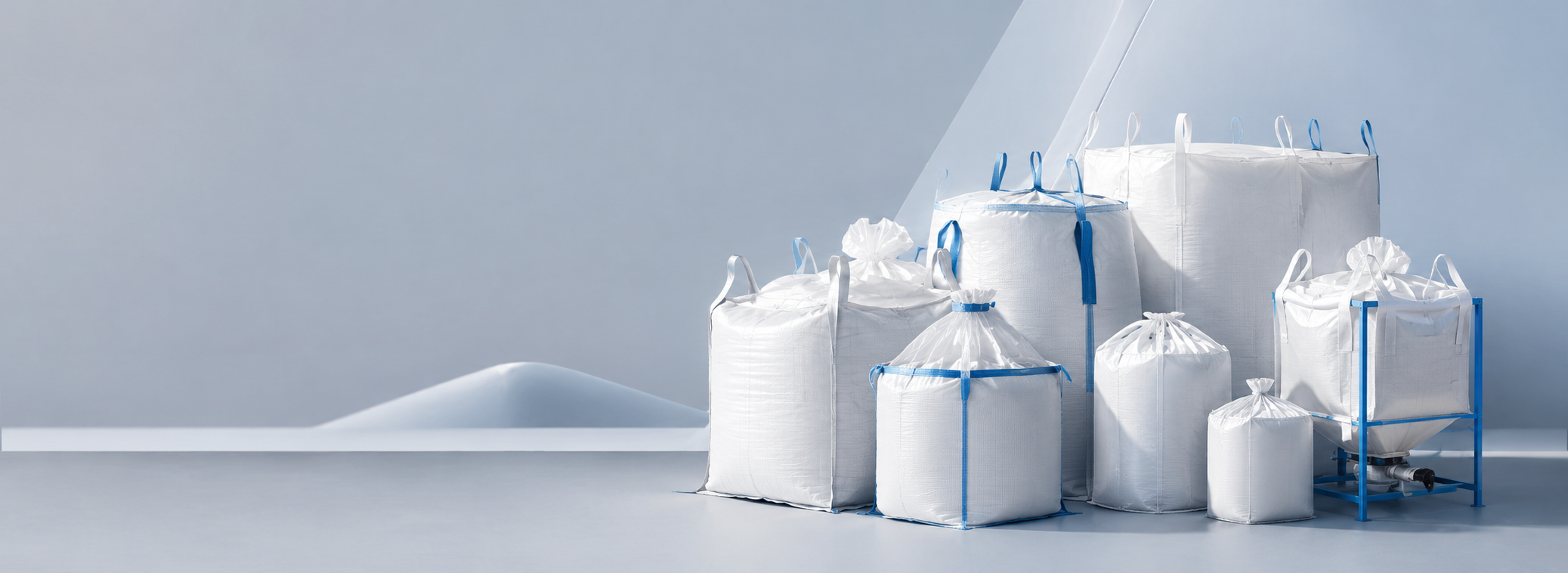
FIBC Bag Styles Available
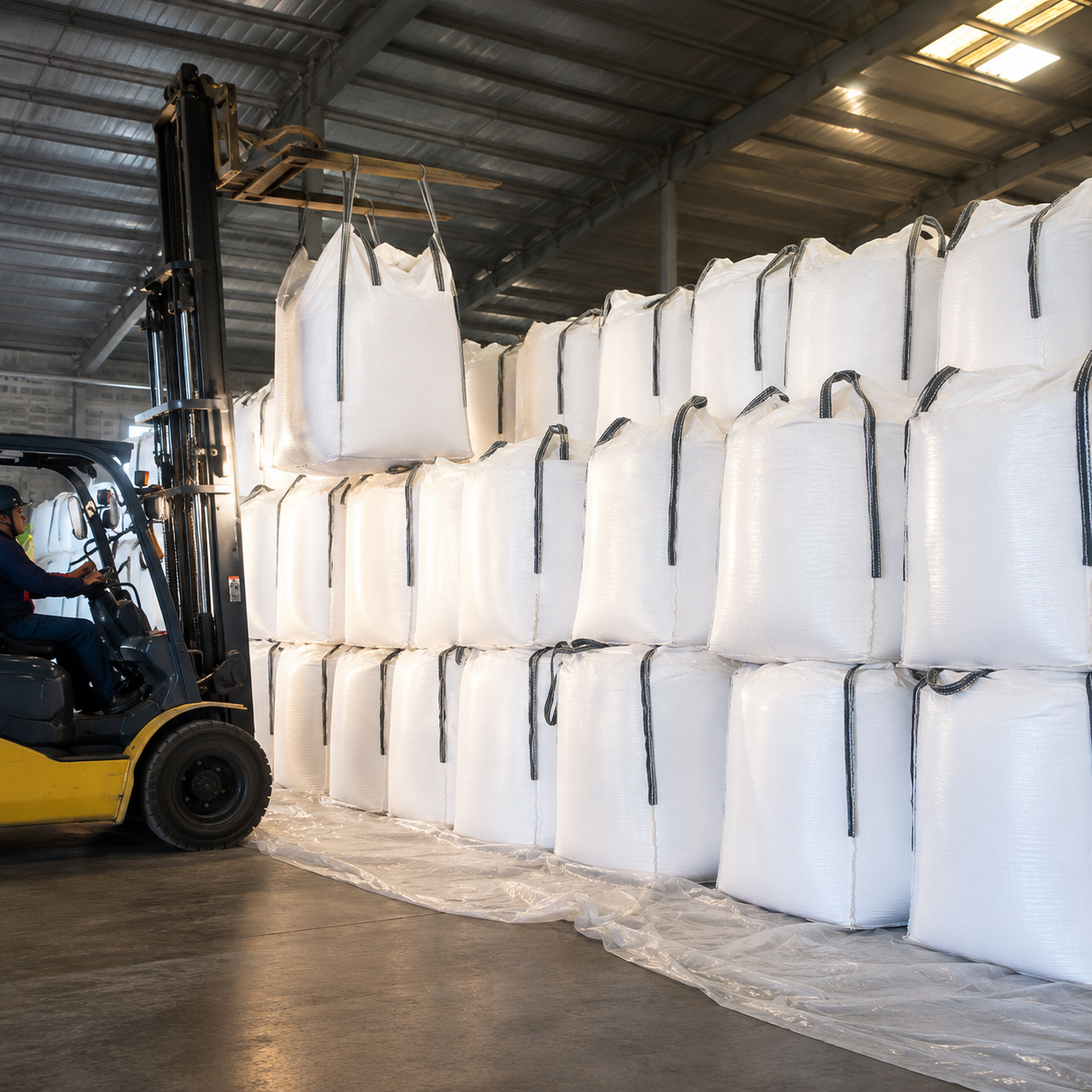
You get good strength and shape retention, making this structure suitable for minerals, chemicals, agricultural products, and general industrial materials.
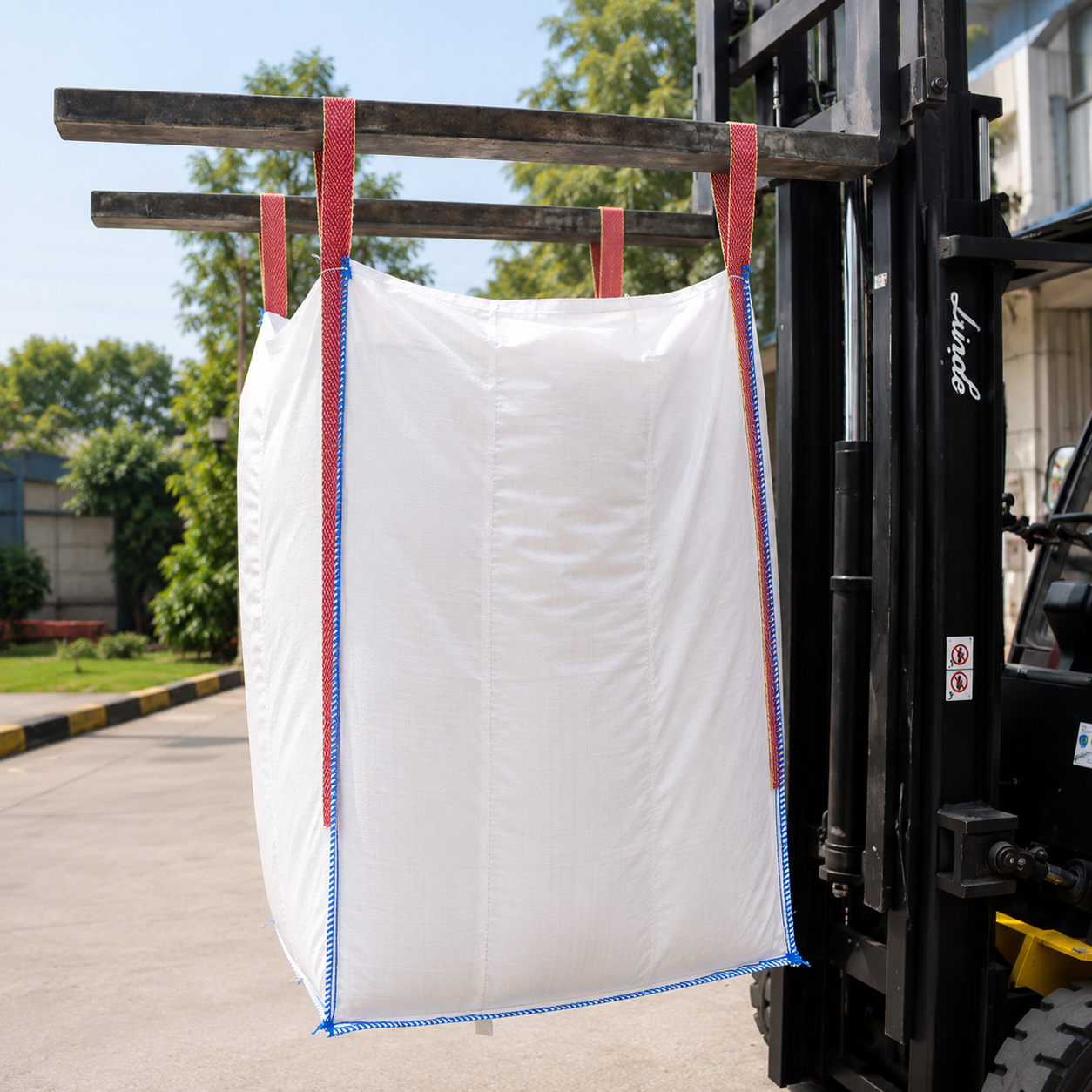
You get a more regular bag shape and a larger printable area, which is helpful when you need stable handling and clear product branding.
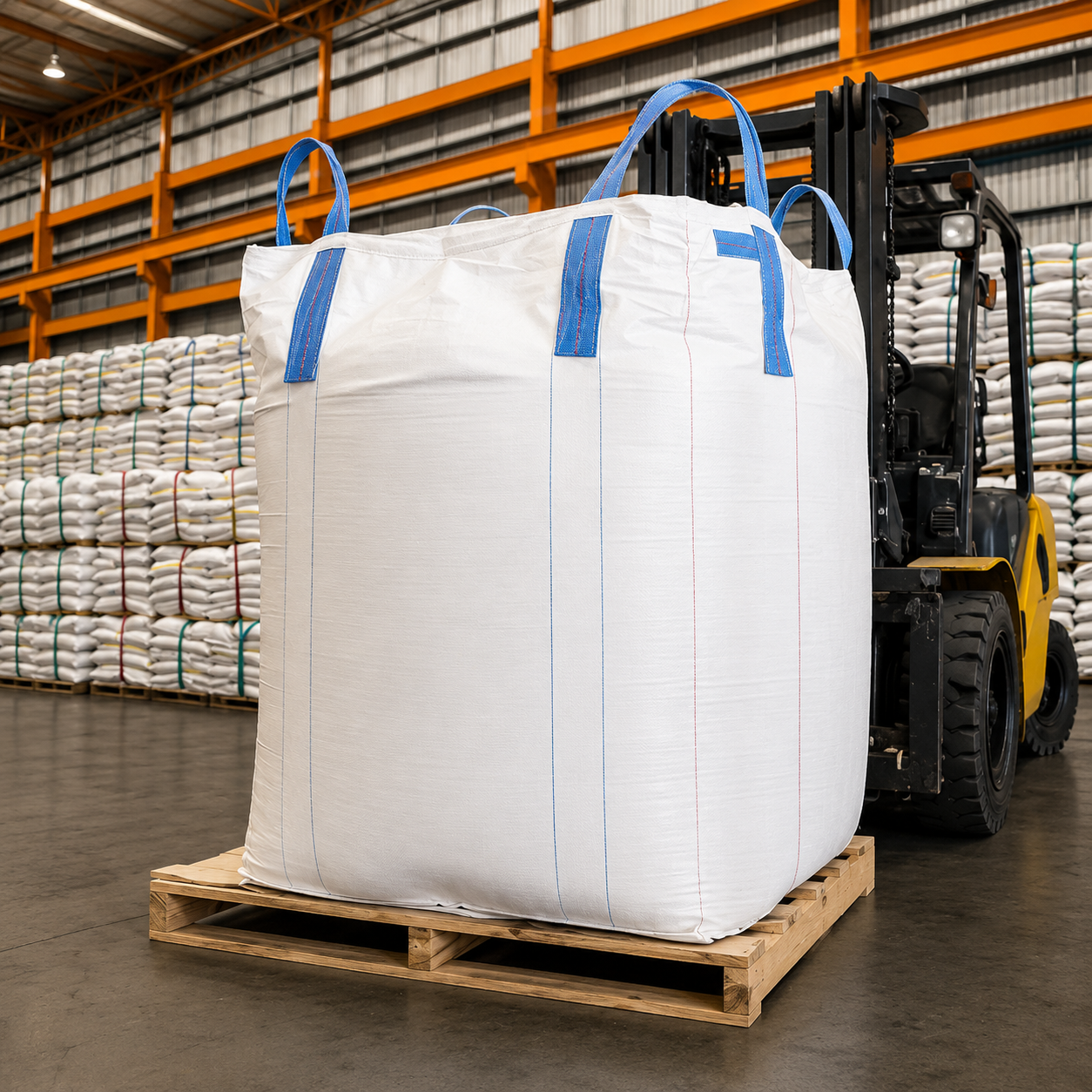
With fewer body seams, this design helps you reduce potential leakage points when packing fine powders and granular materials.
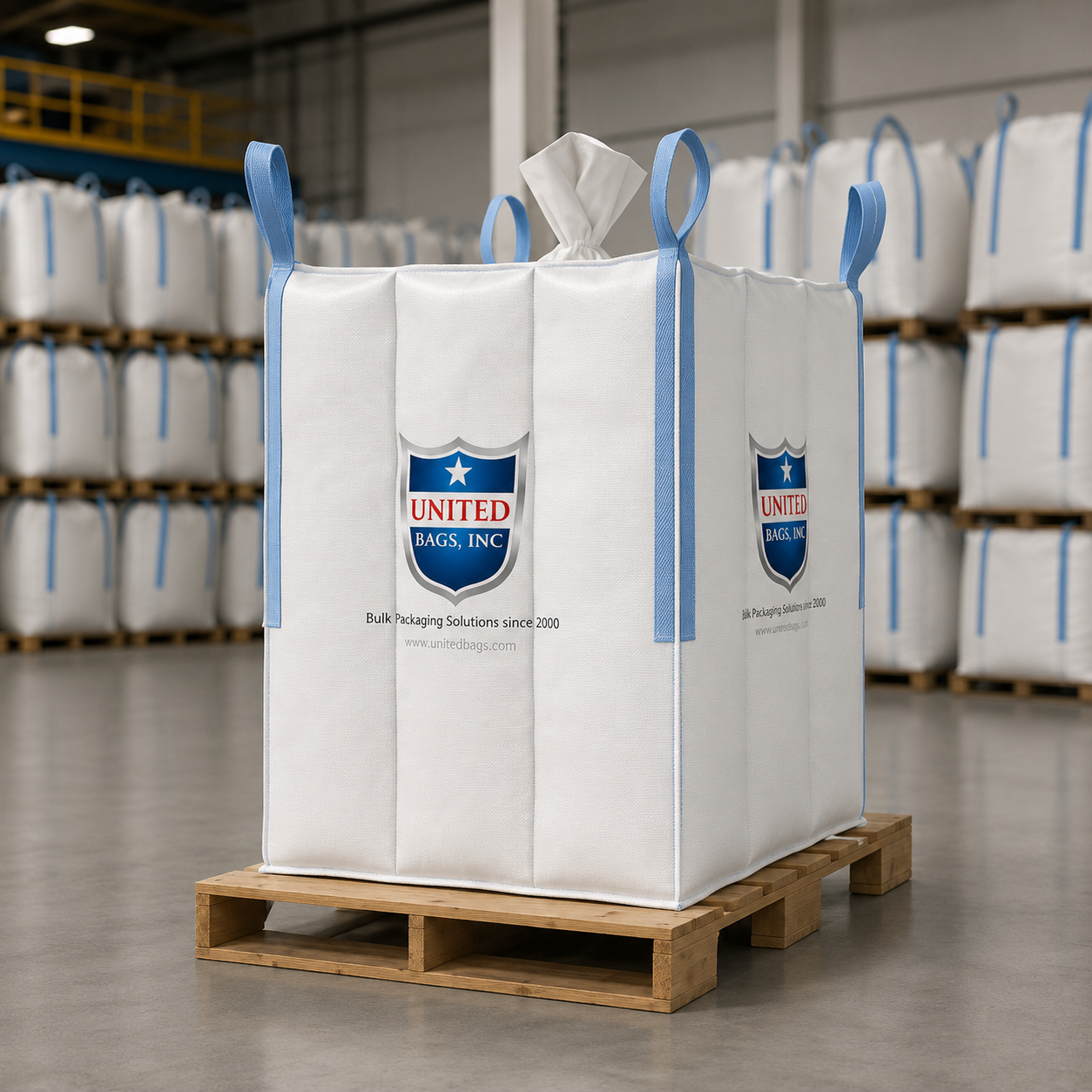
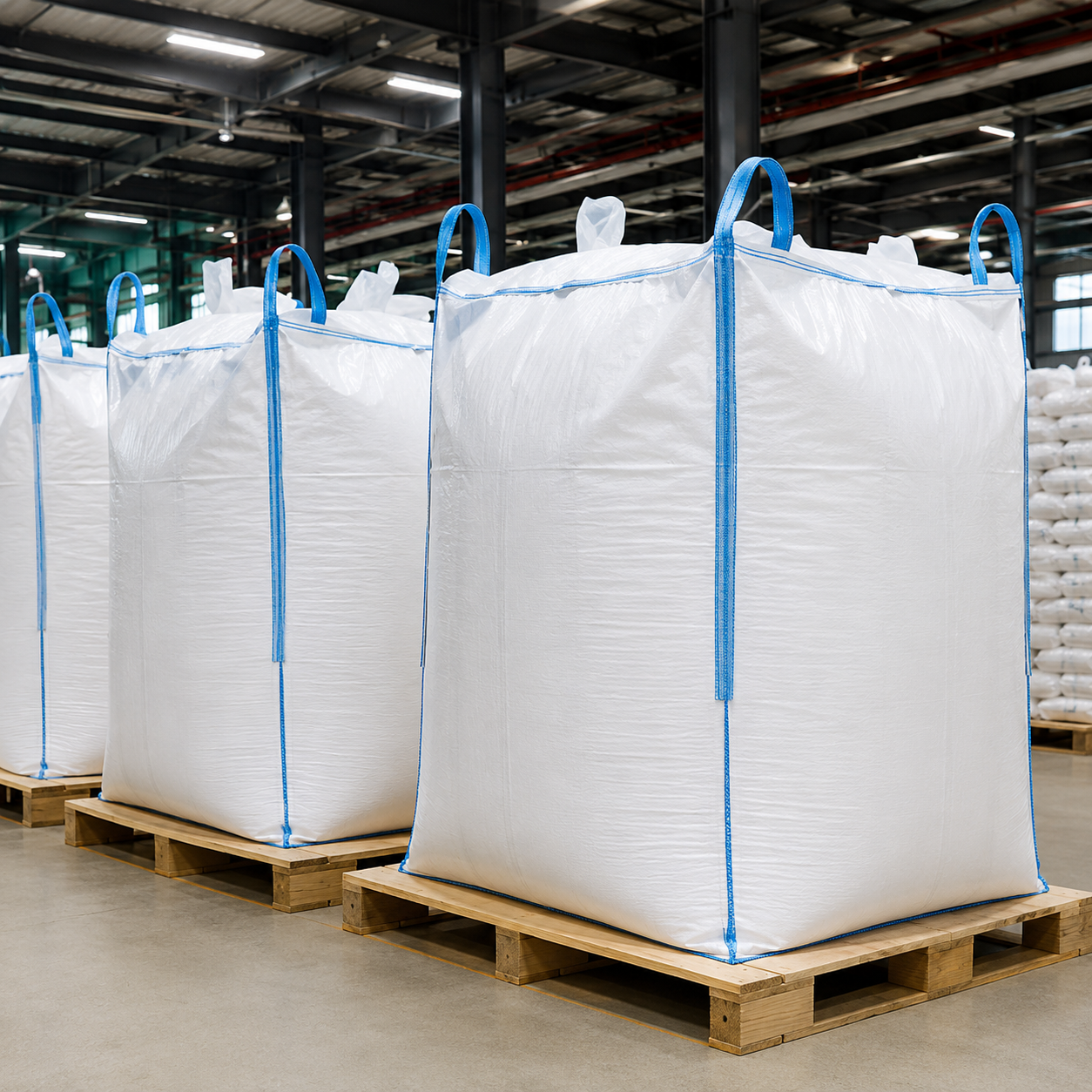
Internal baffles help your filled bag stay more square, allowing you to improve pallet stability, warehouse stacking, and container space utilisation.
FIBC Liner Selection
Select the appropriate fabric and liner structure according to your material, moisture sensitivity, powder fineness, and storage conditions.
Liner size, thickness, attachment method, and closure can be customised according to your filling and discharge process.
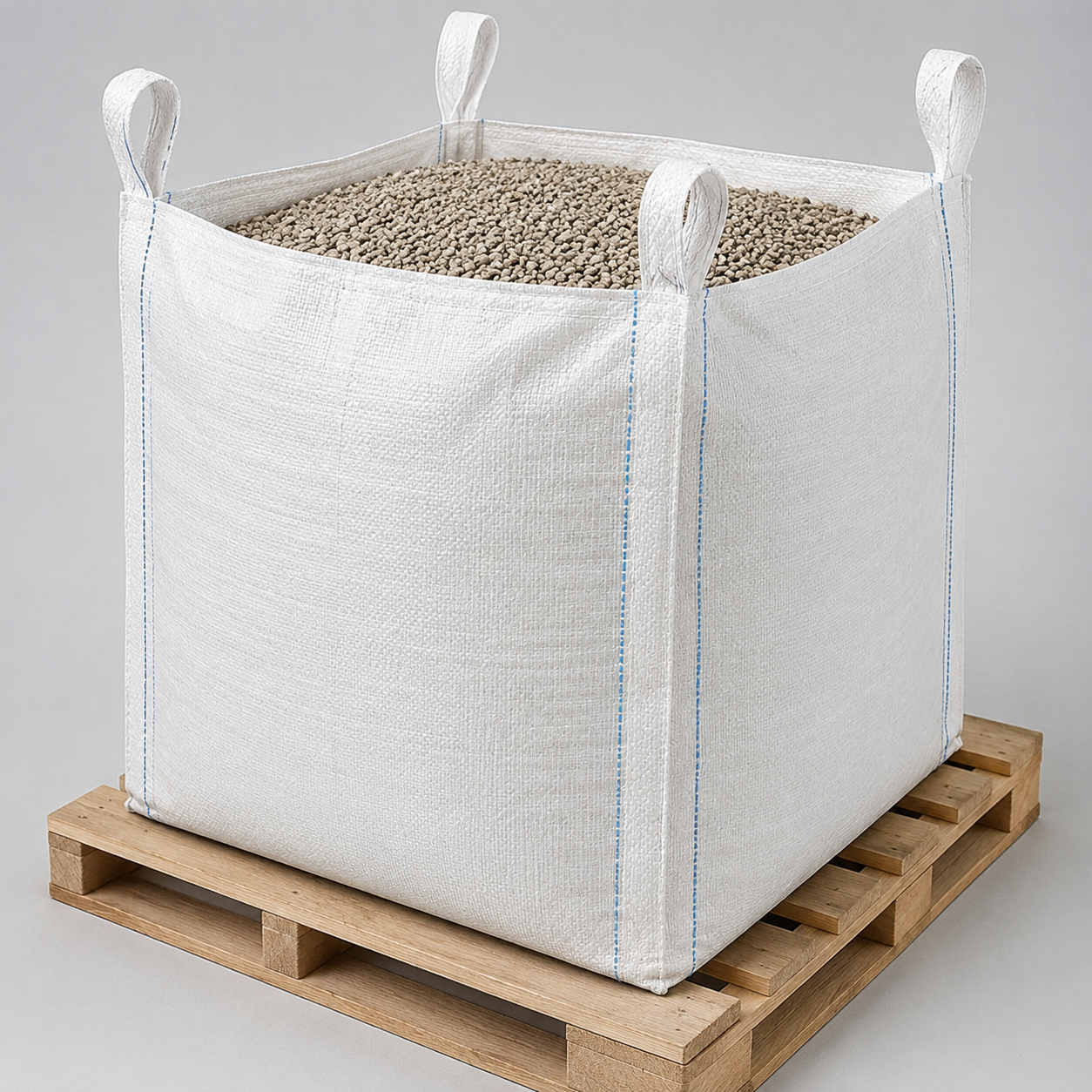 Uncoated FIBC
Uncoated woven fabric provides good breathability and is suitable for granules, blocks, and other materials that do not require additional moisture protection.
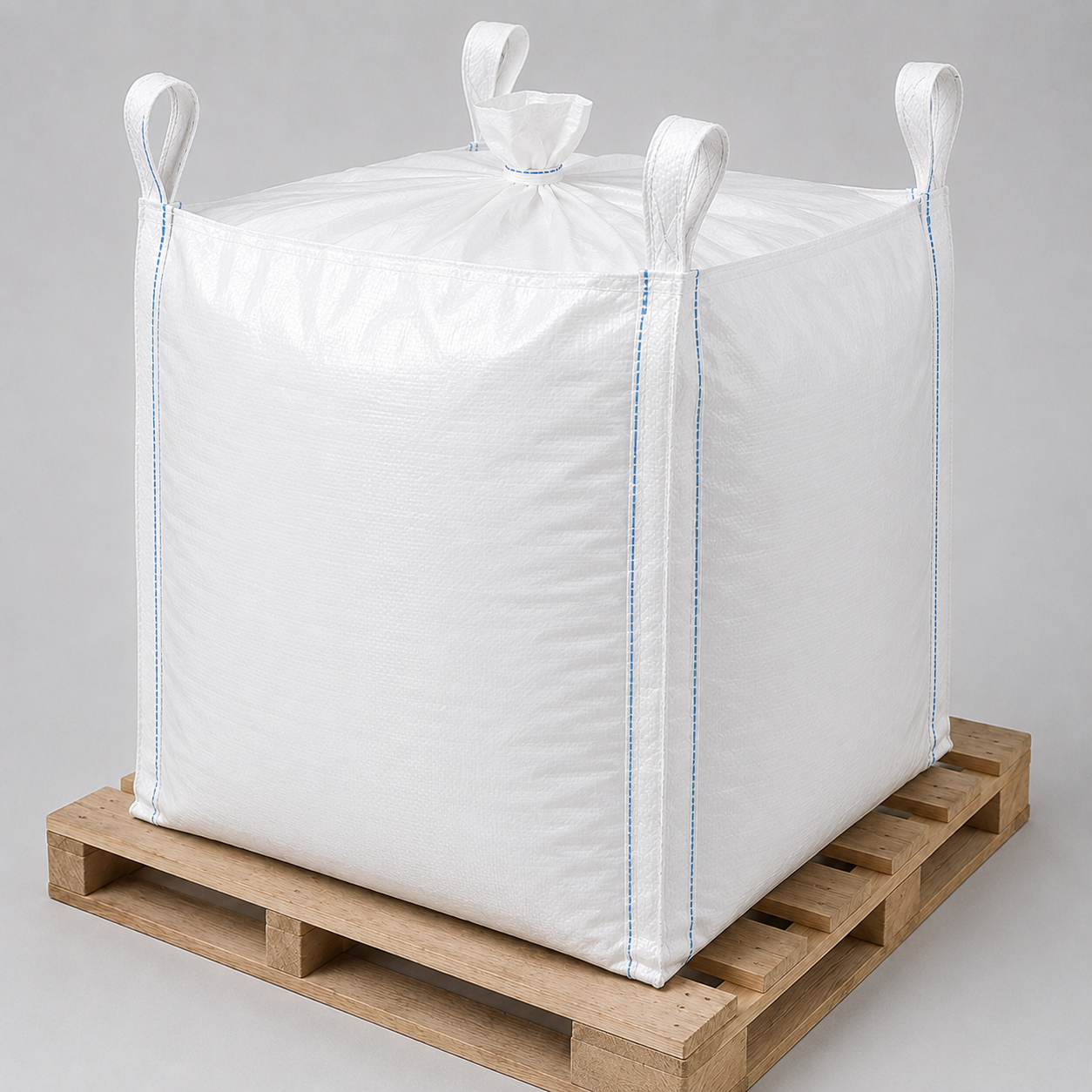 Coated FIBC
A laminated coating helps improve moisture resistance, dust control, and protection against fine-powder leakage. It is commonly used for powders, chemicals, and moisture-sensitive materials.
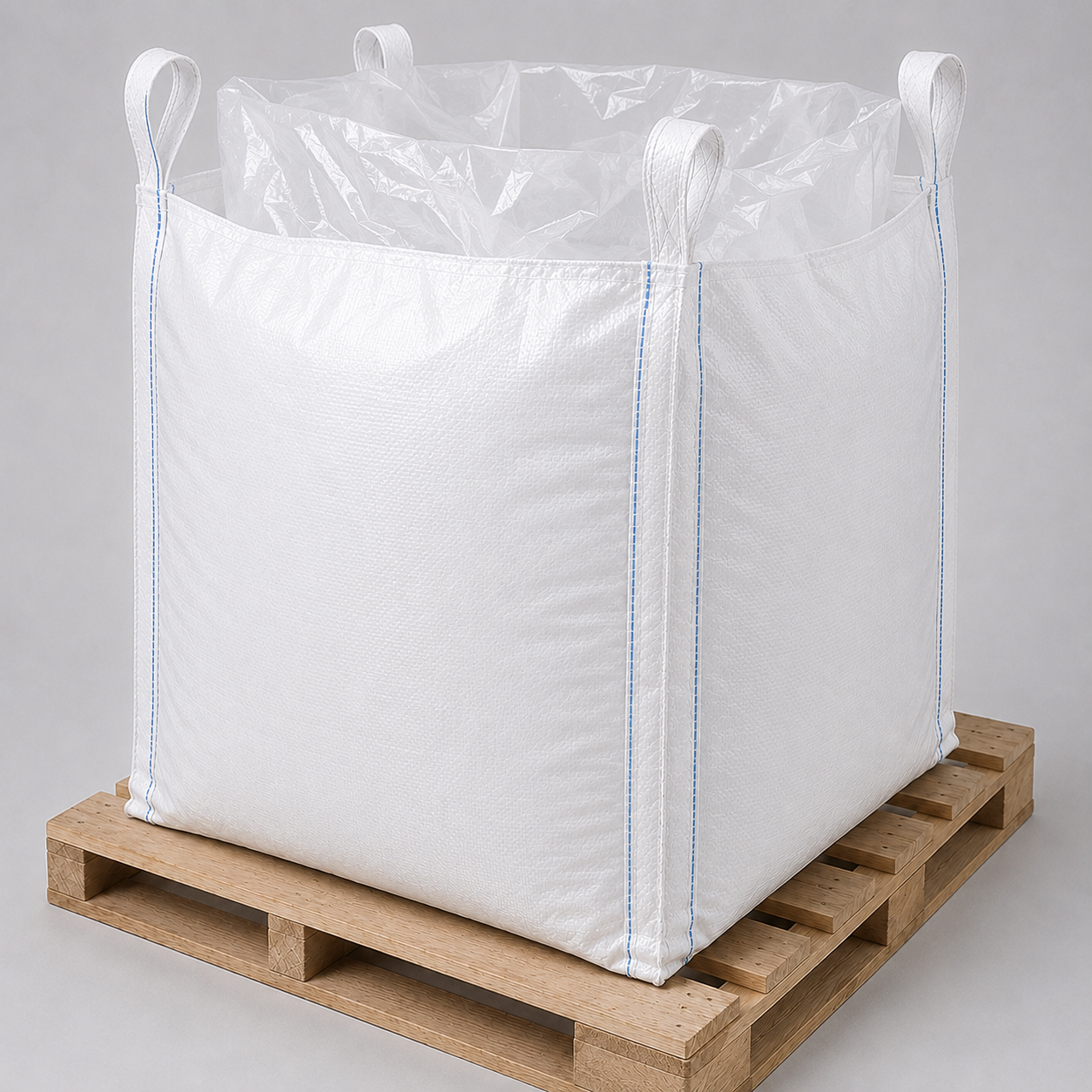 FIBC with PE Liner
A PE inner liner provides an additional barrier between the material and the woven bag, helping reduce moisture penetration, contamination, and powder leakage.
FIBC Bags Customised for Your Handling Process
Your bulk bag should work with your material, equipment, and handling process. Select the size, structure, protection, and accessories that fit your application.

Customise the width, height, volume, and loading capacity according to your material and required filling weight.

Choose the fabric weight, coated or uncoated surface, and bag construction according to the load and material type.

Select open tops, filling spouts, discharge spouts, flat bottoms, or other structures to match your equipment.

Customise the loop type, length, position, and reinforcement for forklift, crane, or manual handling.

Add PE liners, coated fabric, sift-proof seams, or other protection for moisture-sensitive and fine materials.

Add logos, handling marks, document pockets, labels, and customised packing according to your order.

Select the required safety factor, load rating, and testing standard according to your application and handling conditions.

Customise bale size, pallet packing, quantity per package, and container loading to match your storage and shipping needs.
Make Every Lift Safer and Easier
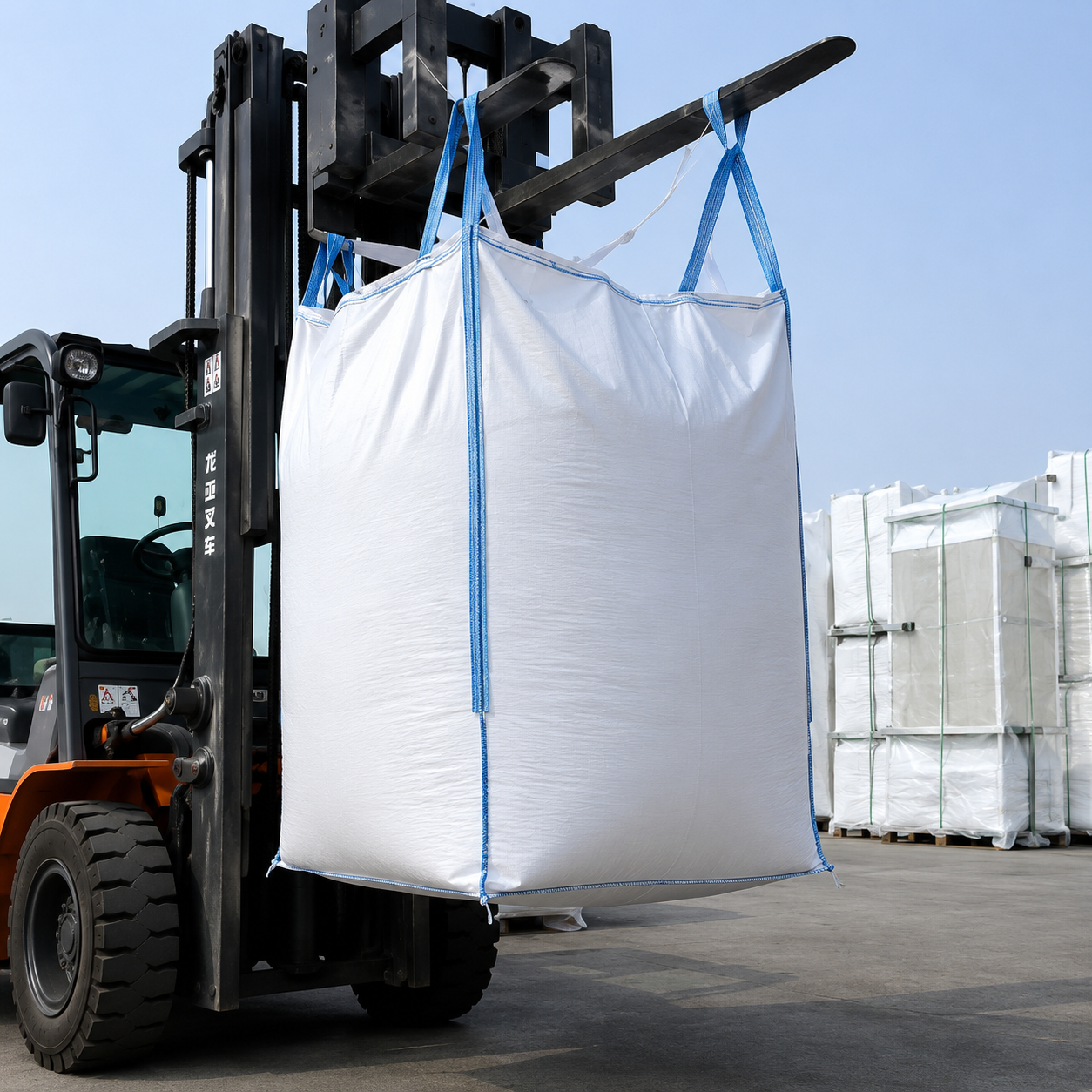
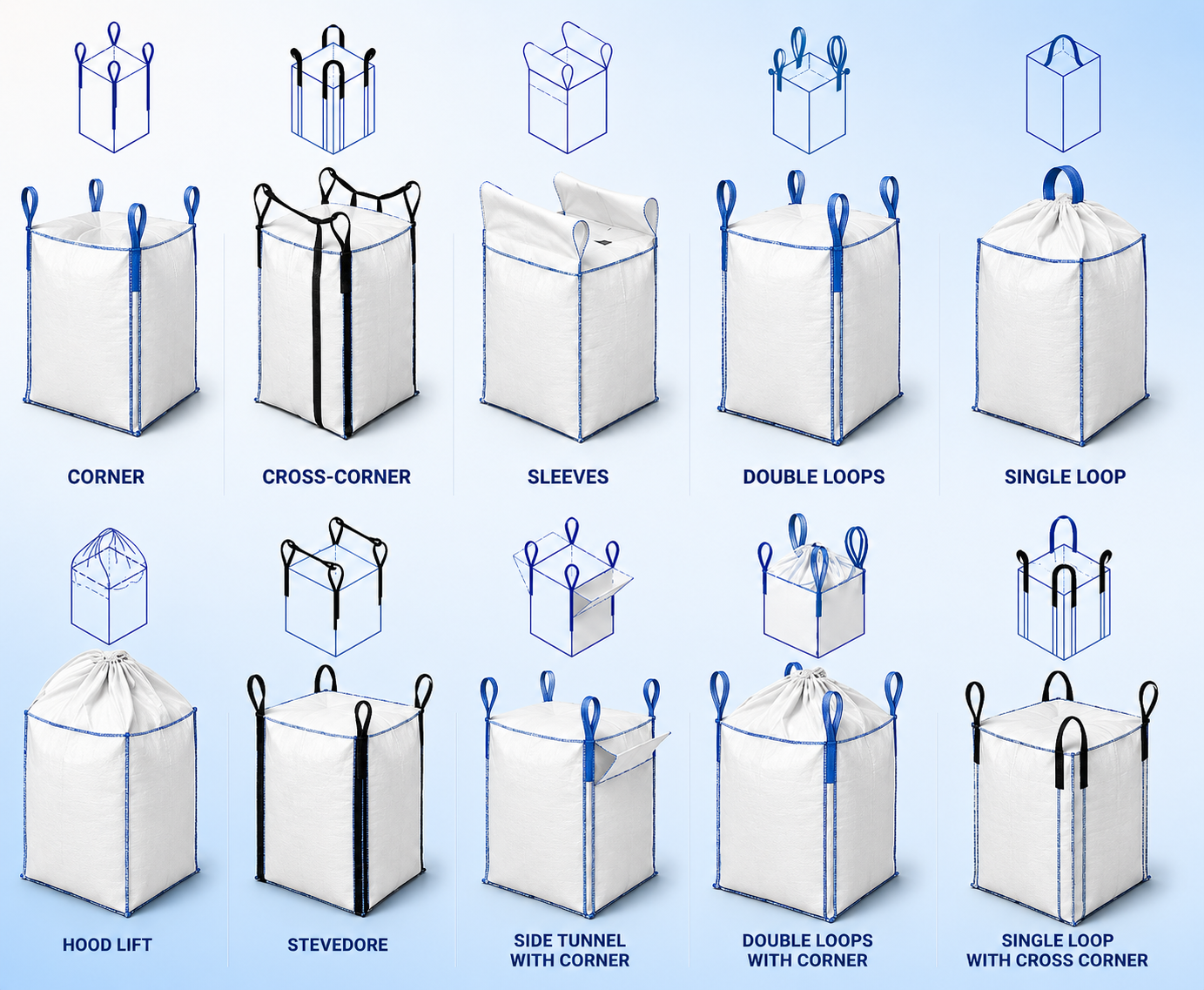
The right lifting structure helps your FIBC bag work safely and efficiently with your forklift, crane, filling equipment, and handling process.
Available options include four corner loops, cross corner loops, stevedore straps, double lifting loops, single lifting loops, and tunnel loops. The loop type, length, width, position, and reinforcement can all be customised according to your operating requirements.
Fill Faster, Discharge Cleaner
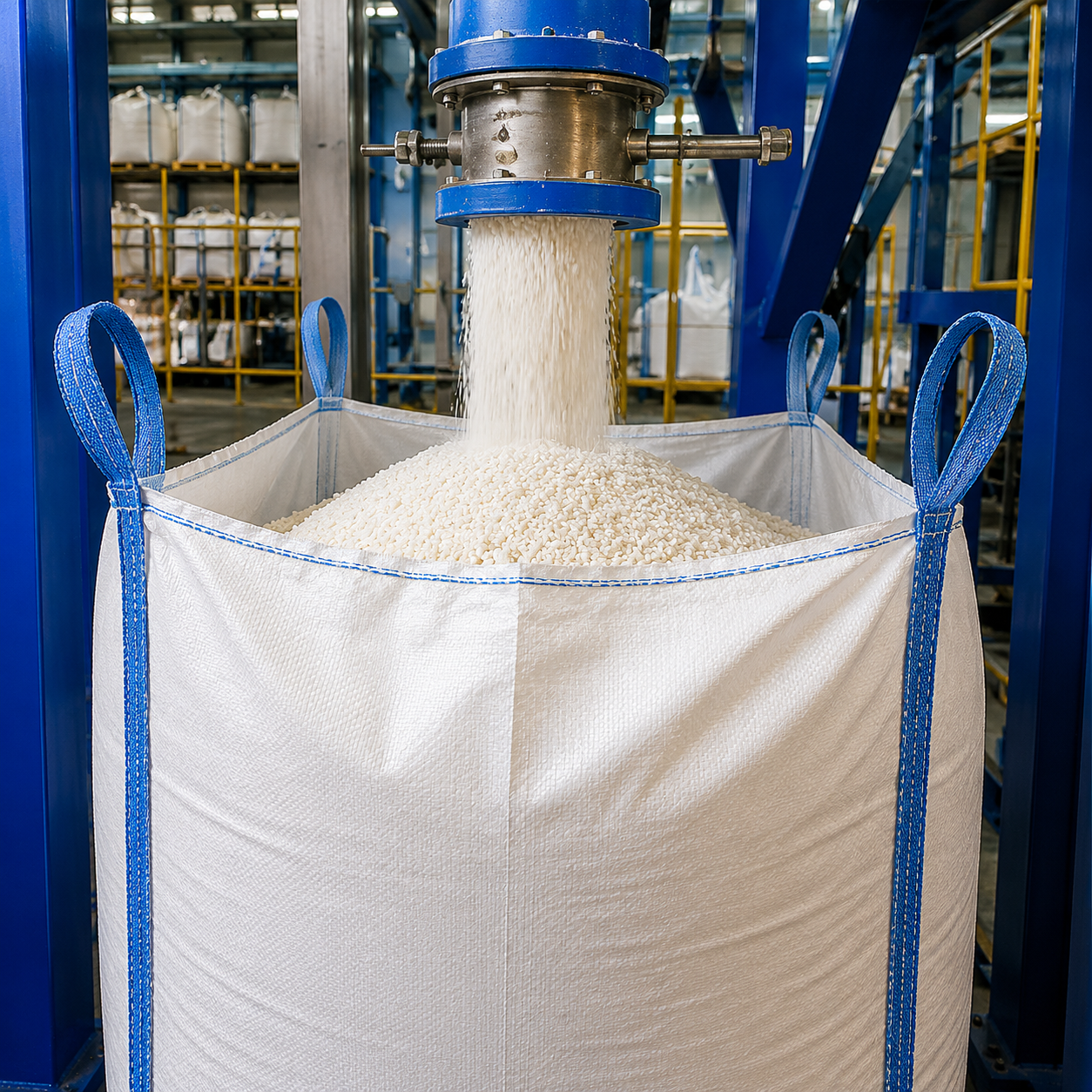
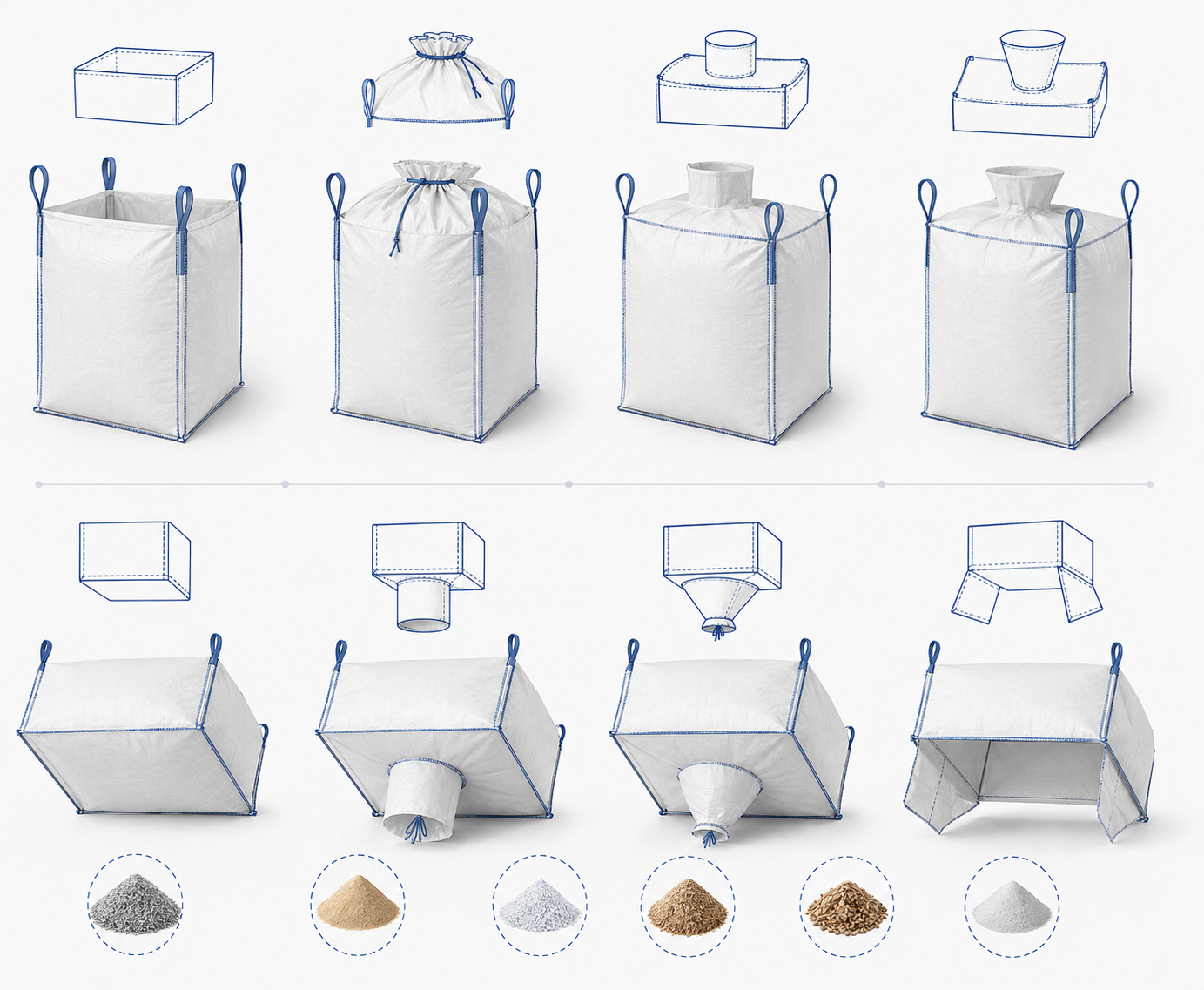
Your bag’s top and bottom structure directly affects filling speed, dust control, material flow, and unloading efficiency.
Choose from open tops, duffle tops, filling spouts, conical filling spouts, flat bottoms, discharge spouts, conical outlets, or full-open bottoms. The inlet and outlet diameter, spout length, tie cord, and protective flap can all be customised to match your equipment and material.
Built for Reliable Lifting and Transportation
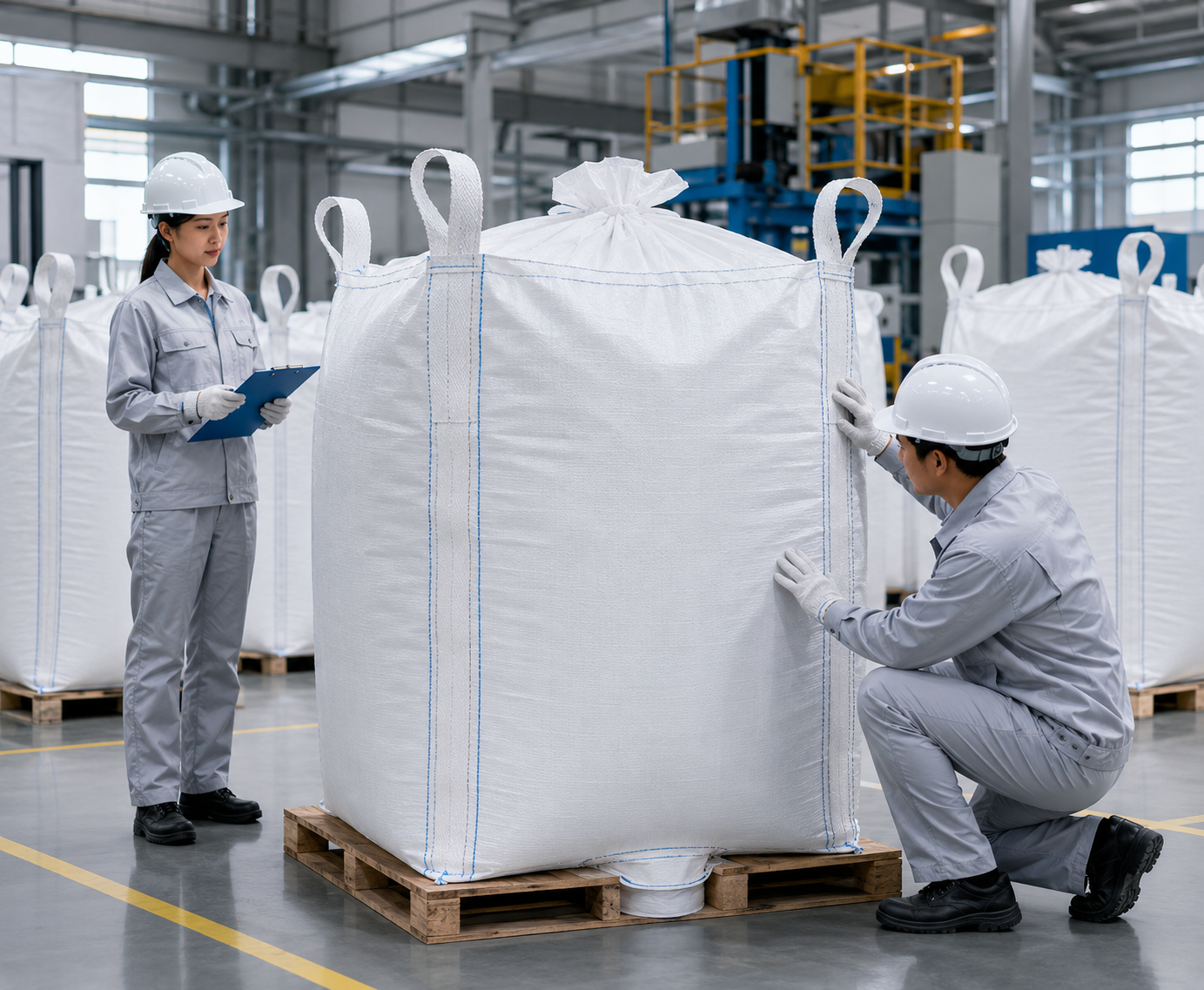
FIBC bulk bags are used for lifting and transporting heavy materials, so consistency in fabric, stitching, lifting loops, and reinforcement is essential.
Our quality control can include:
- PP woven fabric inspection
- Fabric weight and tensile strength checks
- Cutting size control
- Sewing and seam inspection
- Lifting loop position and reinforcement inspection
- Inlet and outlet dimension checks
- Printing inspection
- Load-related testing according to the agreed specification
- Final appearance and packing inspection
Each order is produced according to the confirmed bag drawing and specification sheet.
FIBC Bulk Bags for Different Materials
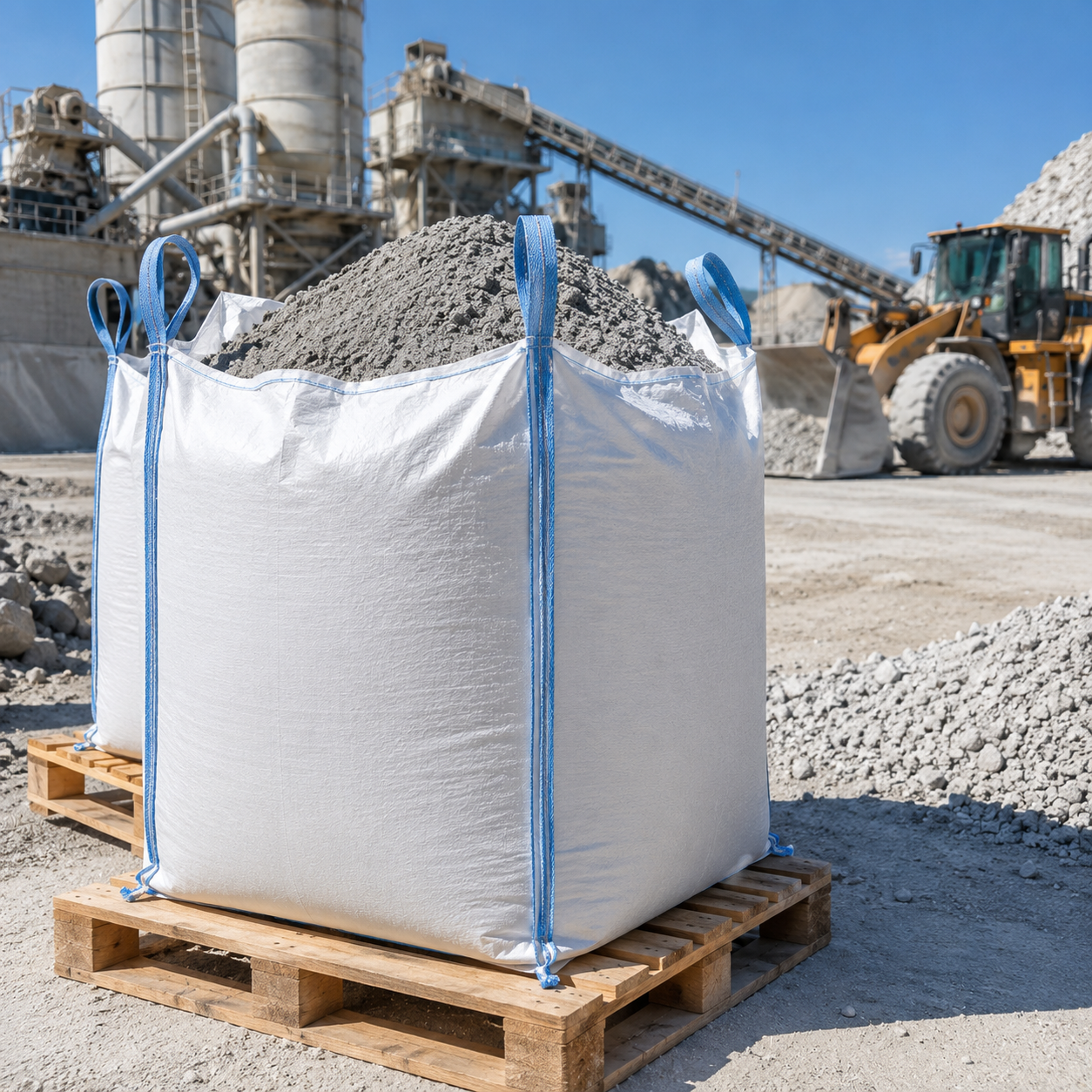
For cement, sand, minerals, limestone, gypsum, refractory materials, and other dense or abrasive products. Reinforced fabric and lifting structures can be selected according to the required load.
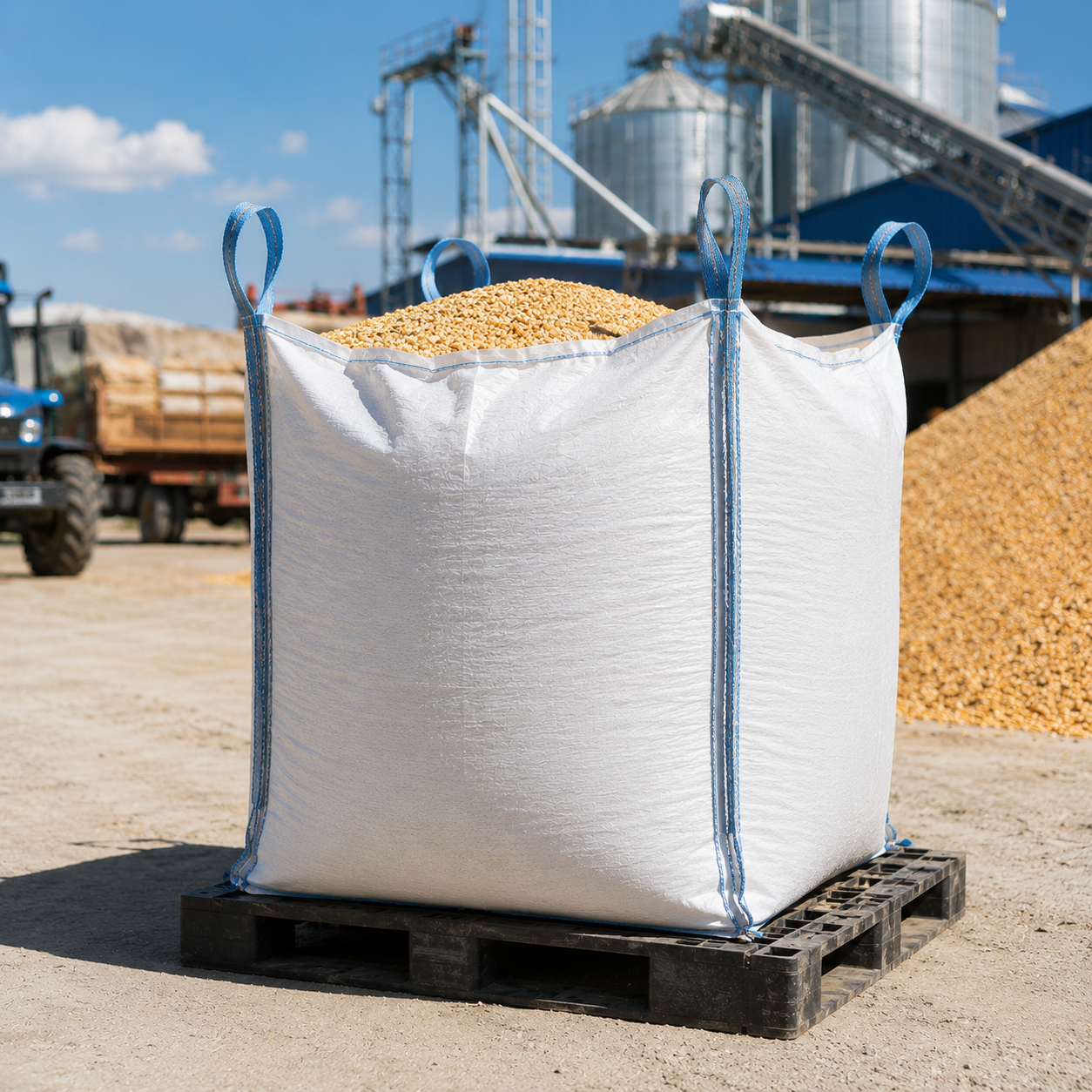
For grains, seeds, animal feed, fertilizer, starch, and other agricultural materials. Breathable fabric, liners, and different filling or discharge structures are available.
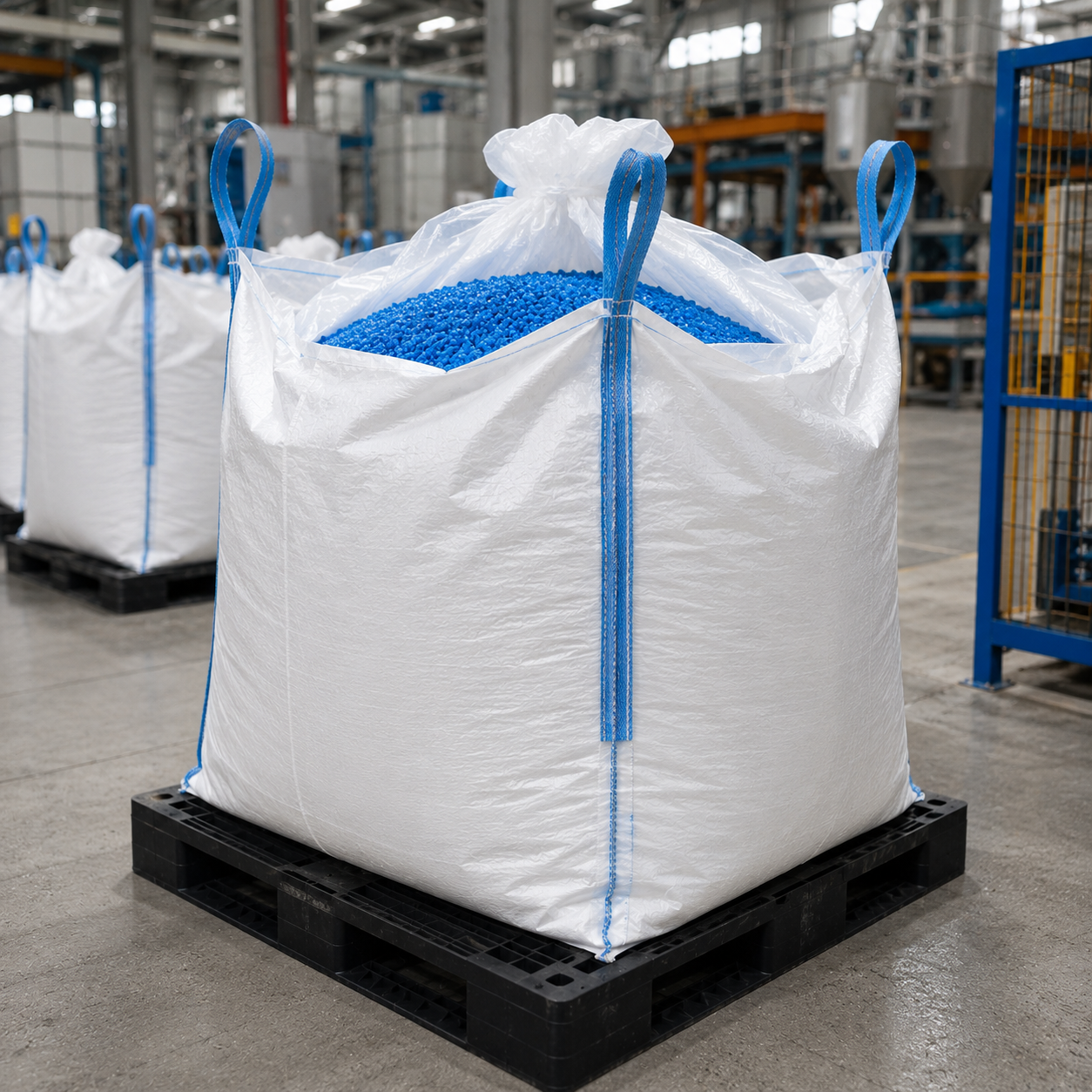
For plastic resin, masterbatch, chemical powders, additives, and industrial raw materials. Coated fabric, liners, sift-proof seams, and antistatic options can be selected where required.
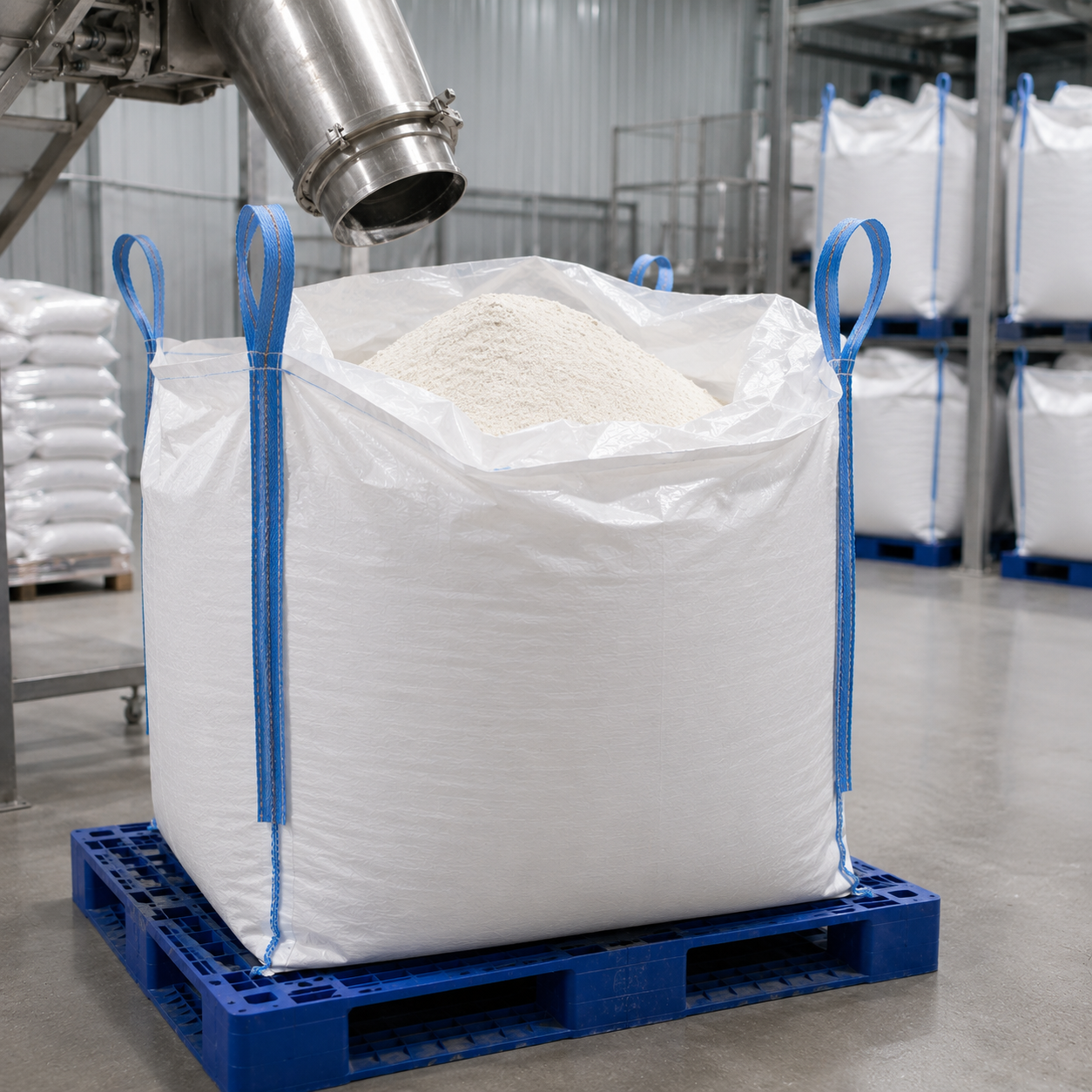
For sugar, salt, flour, starch, and other food ingredients. Food-contact materials, clean production conditions, and inner liners can be discussed according to your compliance requirements.
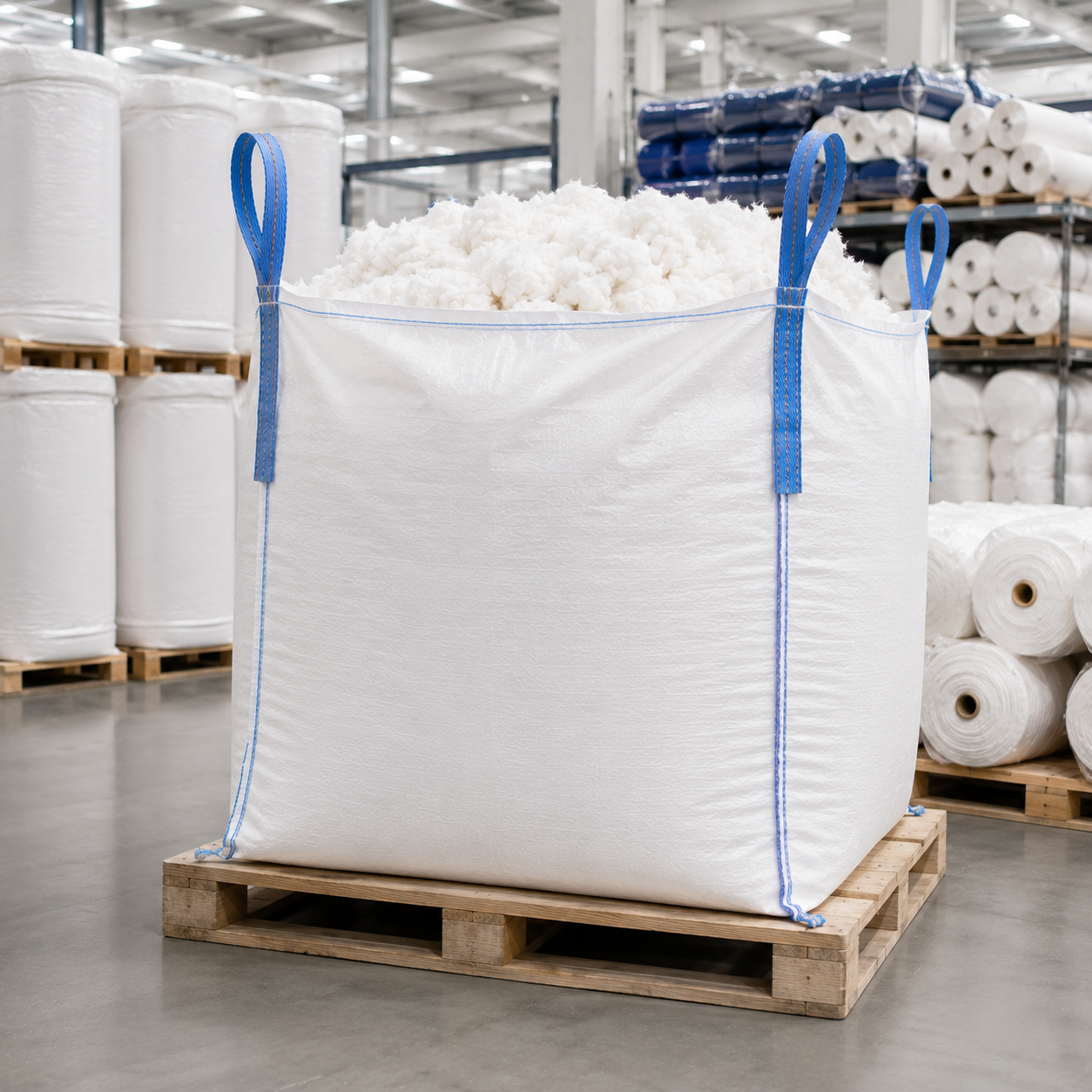
For cotton, wool, synthetic fibres, yarn, fabric scraps, and nonwoven materials. Large-capacity bags, wide openings, and reinforced lifting loops are available.
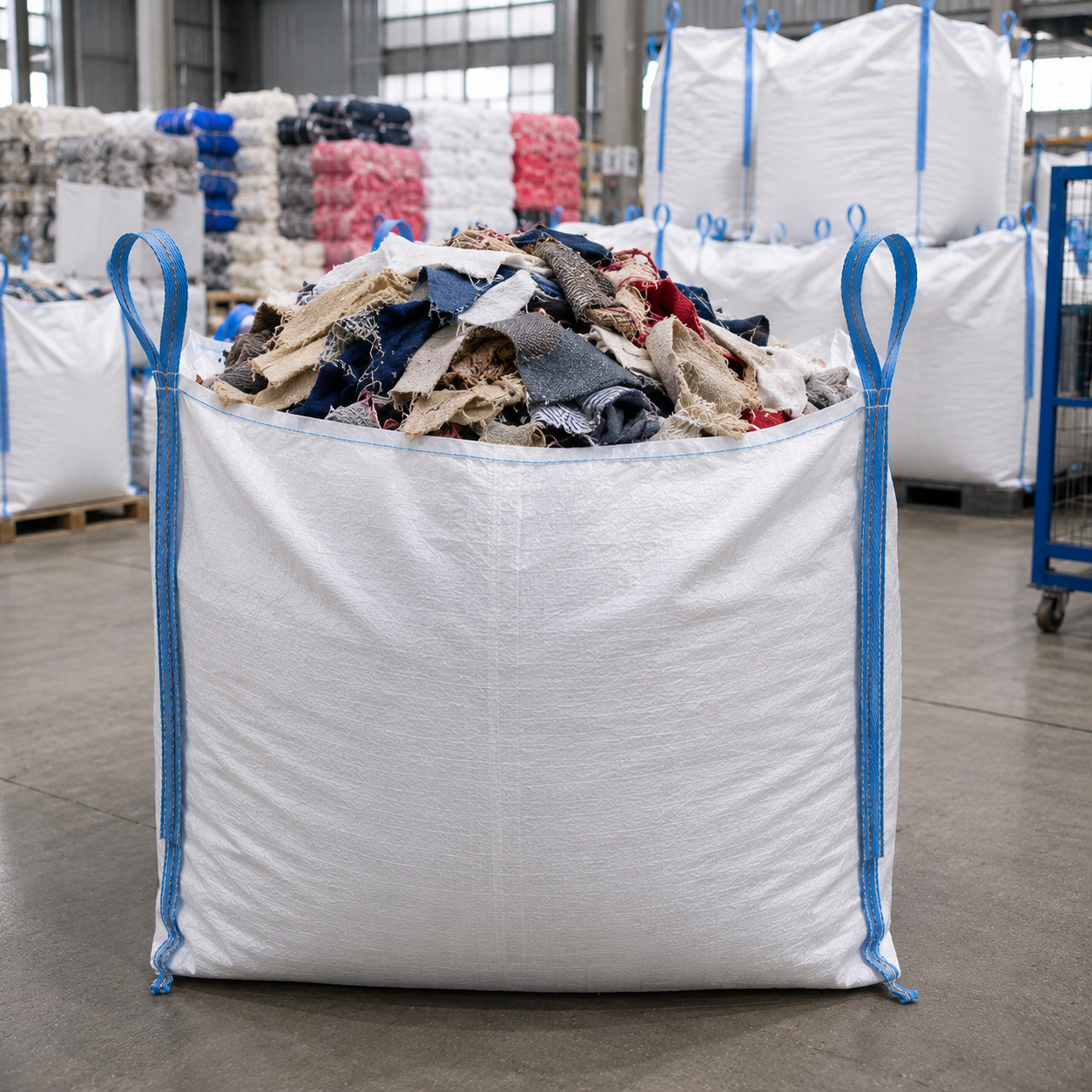
For plastic flakes, recycling materials, wood chips, and industrial waste. Open-top, duffle-top, and high-capacity bag structures are available for easier loading.
Choose the Right FIBC Structure
| Customer Needs | Recommended Structure | Best For |
|---|---|---|
| Fast filling | Open top or duffle top | Bulk materials, recyclables, and irregular products |
| Reduce filling dust | Filling spout or conical filling spout | Powders, granules, and automatic filling lines |
| Control unloading | Discharge spout or conical outlet | Fertilizer, resin, food ingredients, and granular materials |
| Single-use unloading | Flat bottom | Bags emptied by cutting or used for one-time transport |
| Improve moisture protection | Coated fabric or PE liner | Powders, chemicals, and moisture-sensitive materials |
| Prevent fine-powder leakage | Coated fabric, sift-proof seams, or PE liner | Cement, minerals, additives, pigments, and fine powders |
| Improve stacking stability | Baffle bag or Q bag | Palletising, warehouse stacking, and container loading |
| Allow ventilation | Ventilated FIBC | Agricultural products, firewood, vegetables, and breathable materials |
Uncoated bags are breathable and suitable for many granules and dry materials. Coated bags provide better moisture resistance, dust control, and protection against fine-powder leakage.
A PE liner is recommended for moisture-sensitive, very fine, easily contaminated, or high-value materials. It provides an additional barrier between the product and the woven outer bag.
Some bags are designed for single-trip use, while others may be designed for multiple trips. Reuse depends on the safety factor, bag condition, product type, handling method, and applicable regulations.
A 5:1 safety factor is commonly used for single-trip bags. A 6:1 safety factor is generally associated with bags designed for multiple trips, subject to the correct use and inspection requirements.
Yes. Additional fabric layers, stronger base construction, and reinforced seams can be used where the packed material may place extra stress on the bottom.