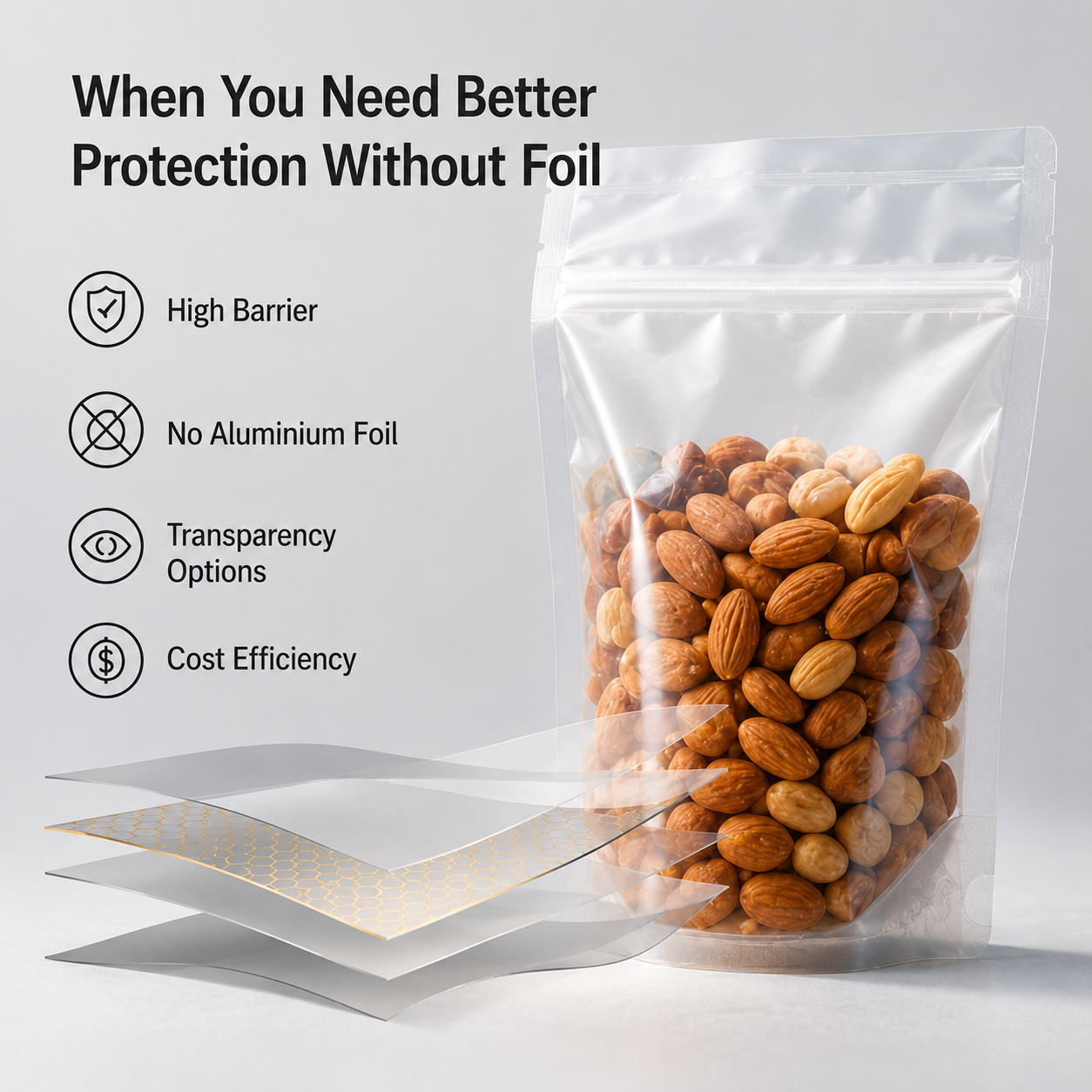
When Do You Need High Barrier Coated Film?
High barrier coated film is a good choice when standard film cannot give your product enough protection during storage, transport, or retail.
You may need it when:
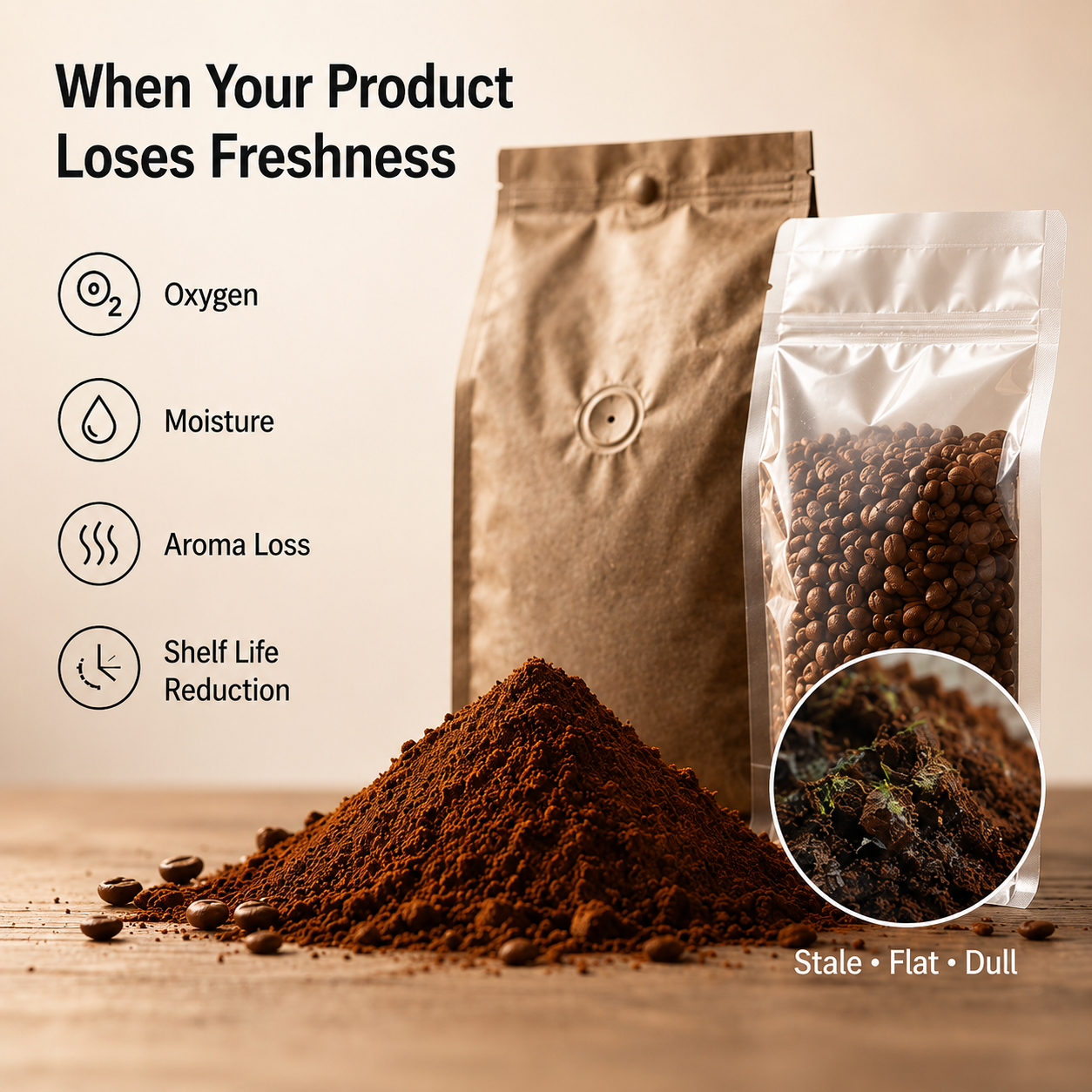
Oxygen affects colour, flavour, or shelf life
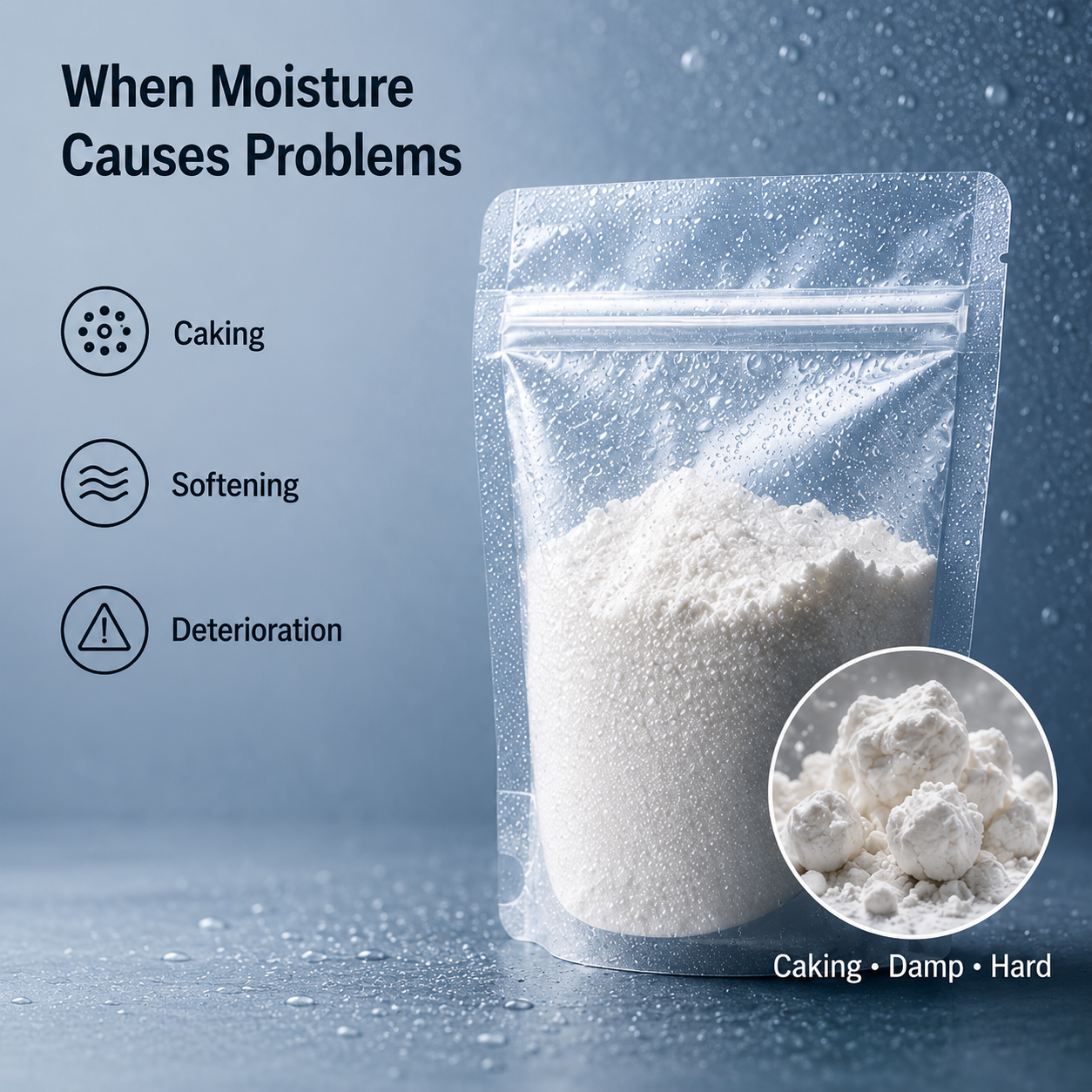
Moisture causes caking, softening, or spoilage
Aroma escapes through the packaging
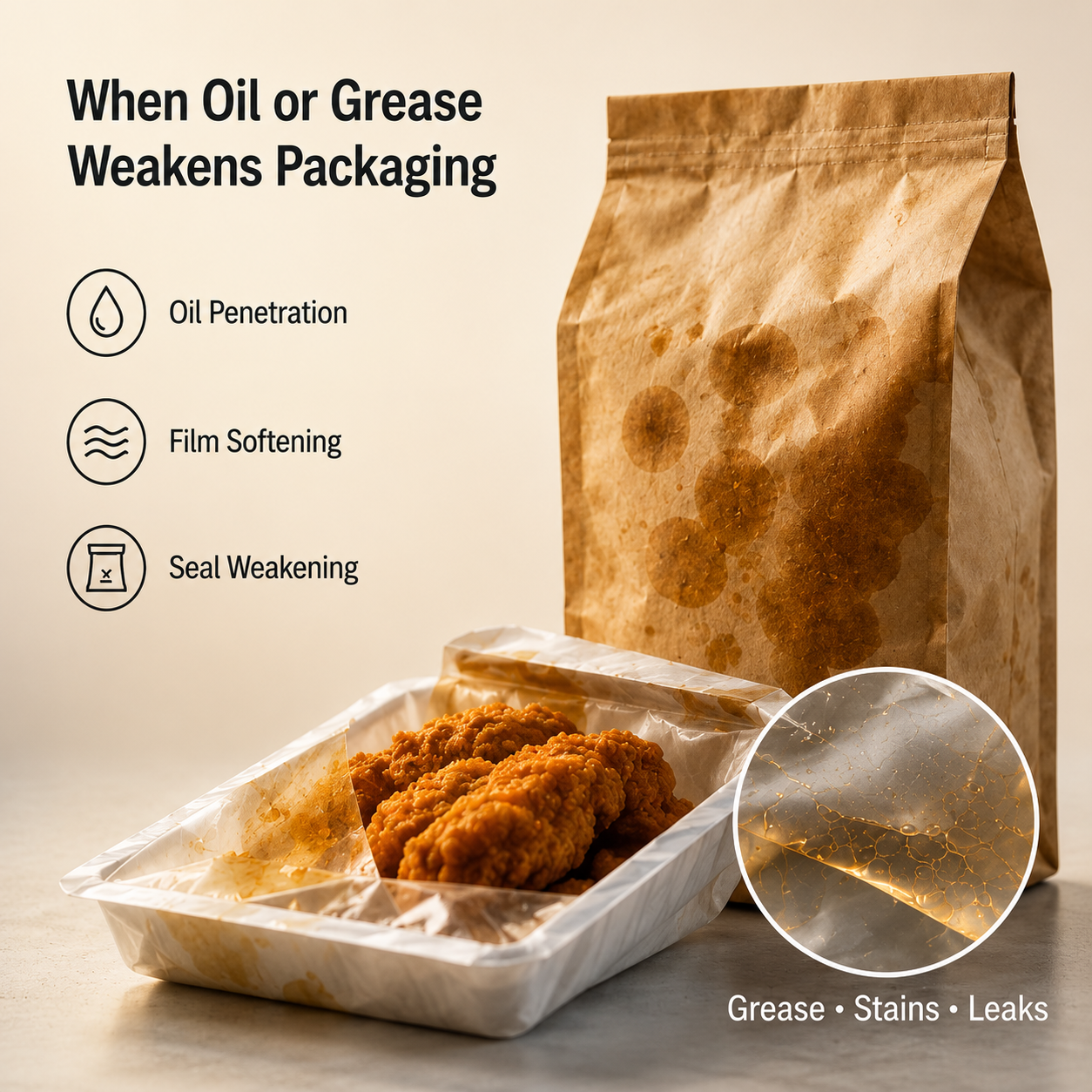
Oils or grease weaken the film structure
You need a clear alternative to aluminium foil
Your current laminate is too thick or complicated
Your product must stay stable during long-distance transport
What Is High Barrier Coated Film?
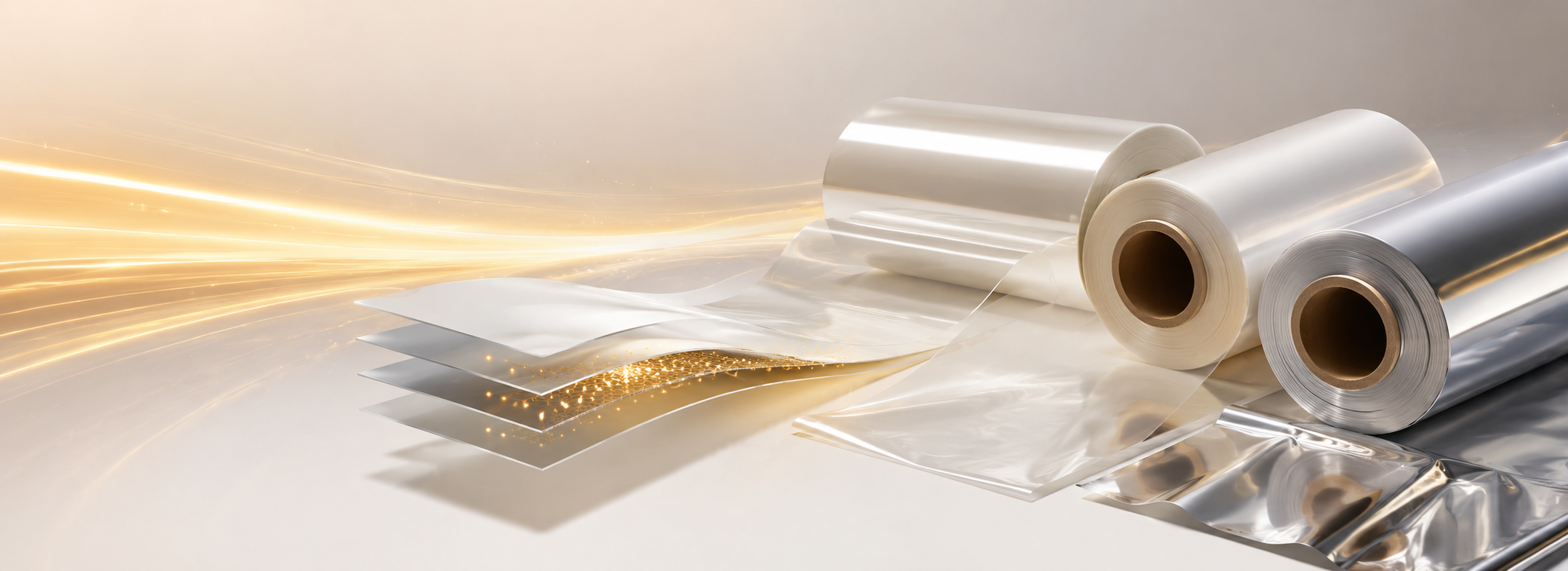
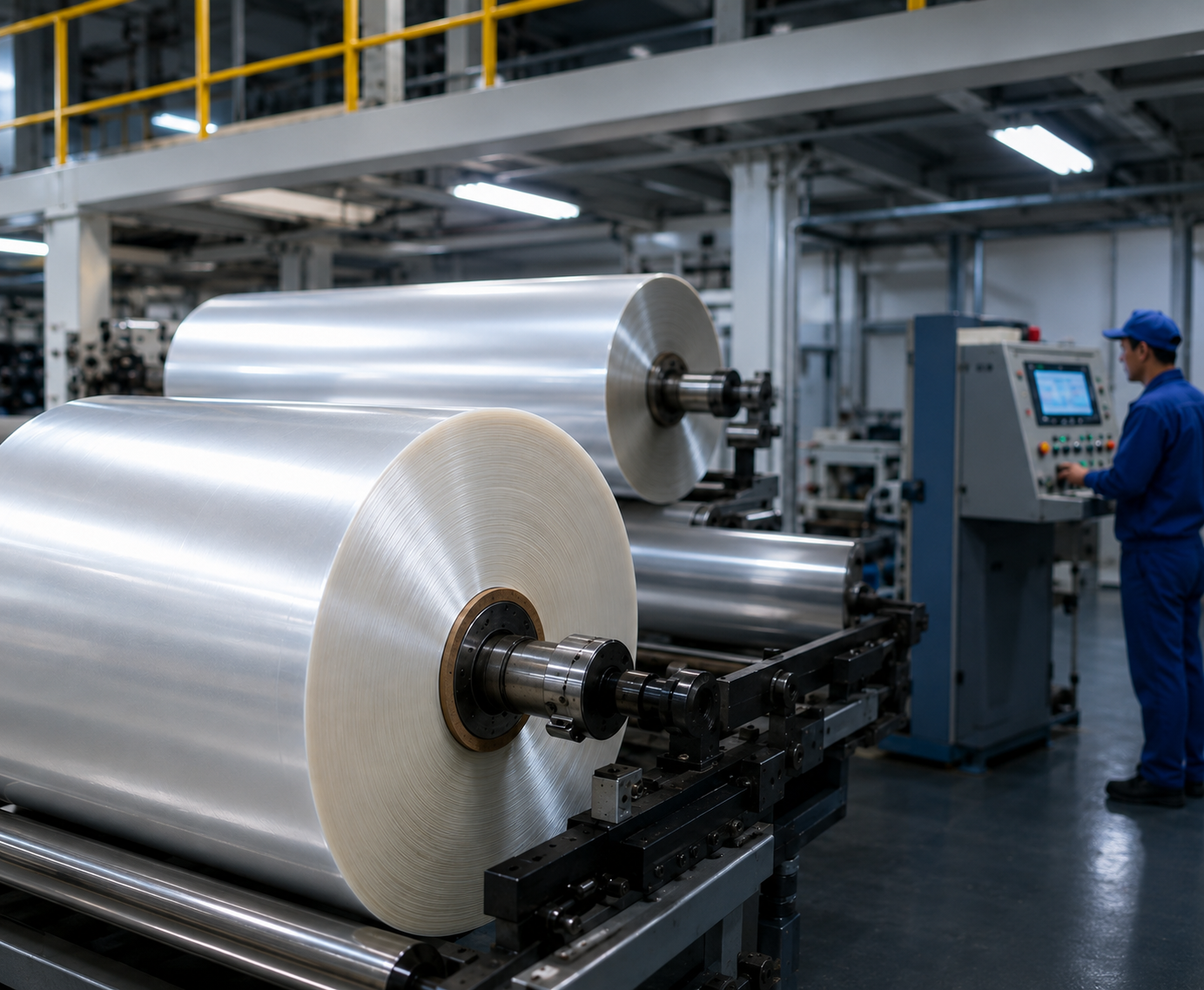
High barrier coated film is a flexible packaging material with a functional coating that improves resistance to oxygen, moisture, aroma loss, grease, oil, and selected chemicals.
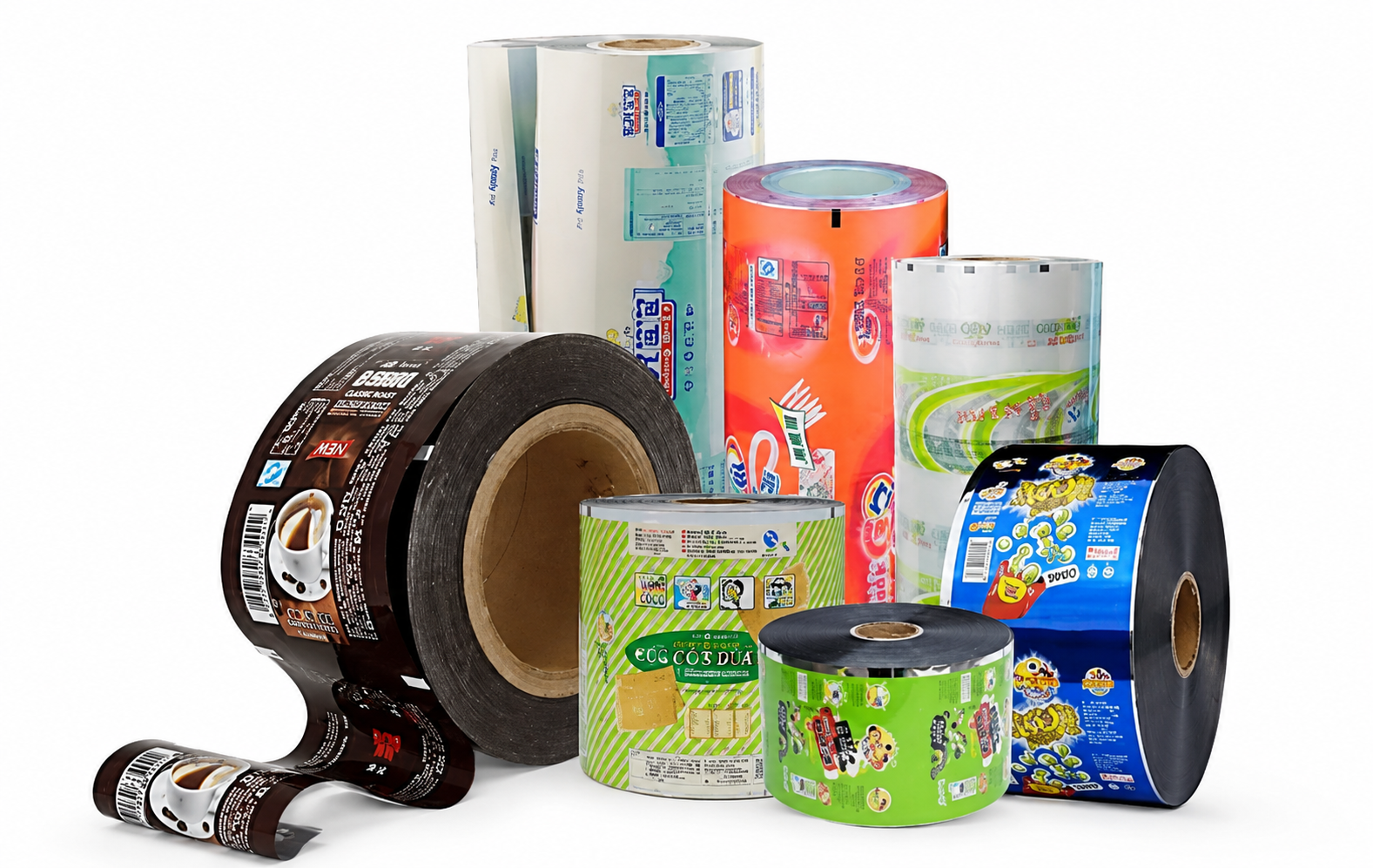
Depending on your packaging requirements, it can be used as a single film or combined with other materials through lamination. This allows you to improve barrier performance without automatically moving to a thicker or more complicated packaging structure.
Yihai Packaging offers customized solutions based on your product’s sensitivity, target shelf life, filling conditions, storage environment, and packaging equipment, thereby achieving a practical balance between product protection, processing performance, and material costs.
Available Coating Options
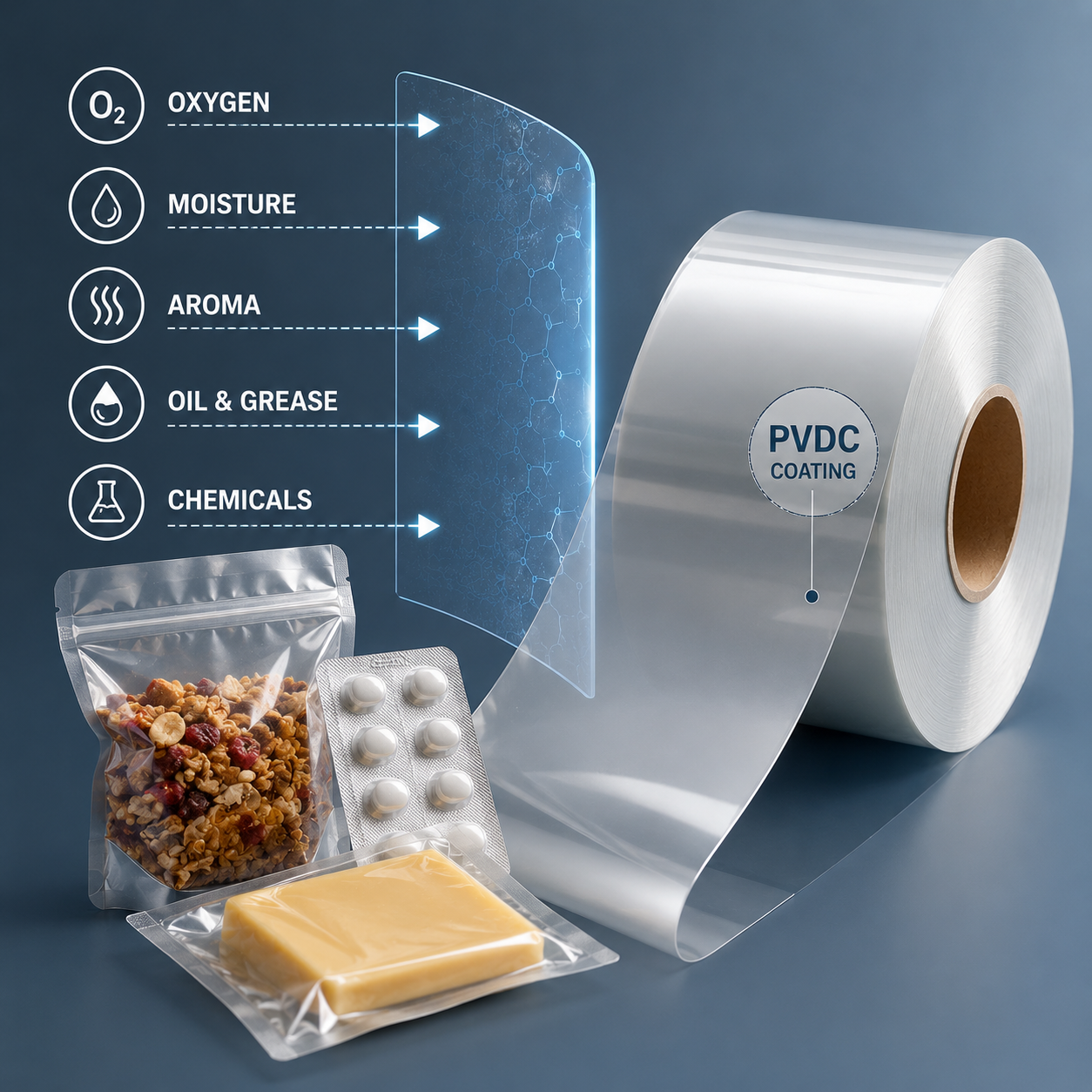
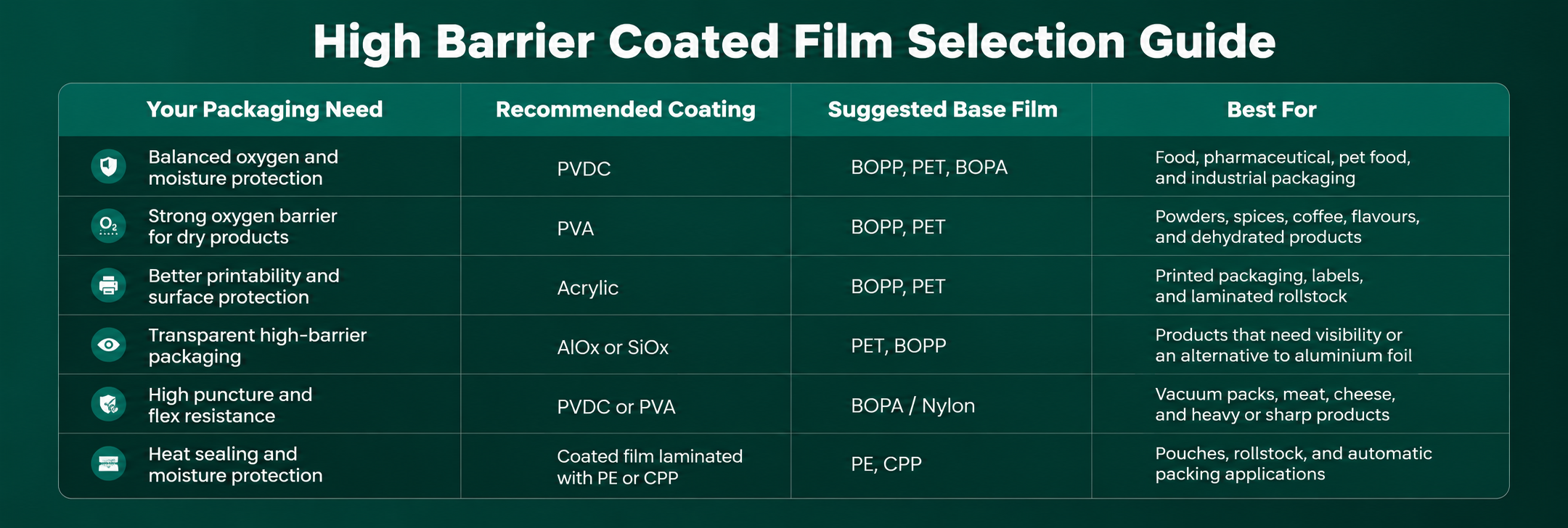
Provides strong resistance to oxygen, moisture, aroma, grease, and chemicals for demanding food, pharmaceutical, and industrial packaging.
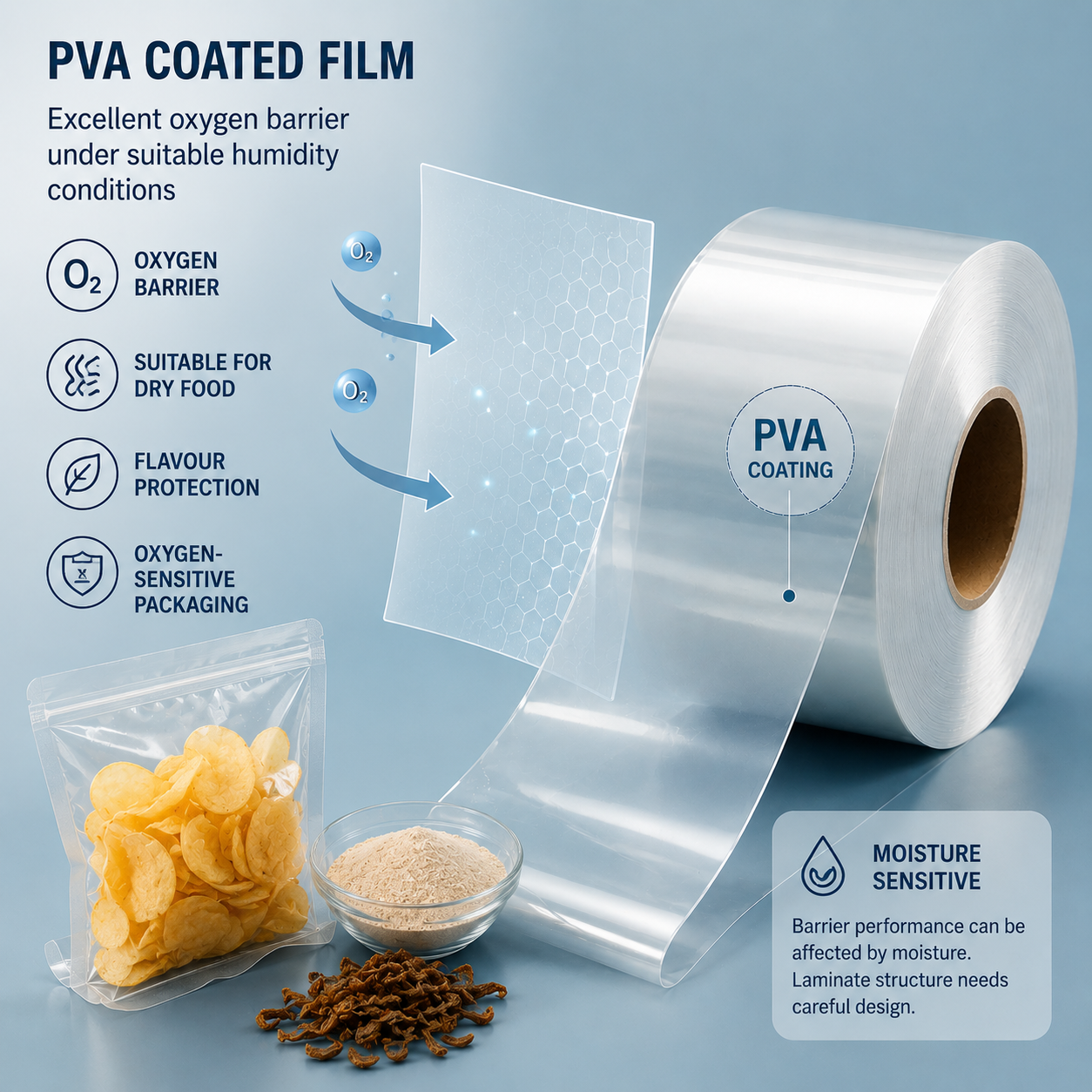
Offers excellent oxygen barrier performance for dry foods, flavours, and other products sensitive to oxidation.
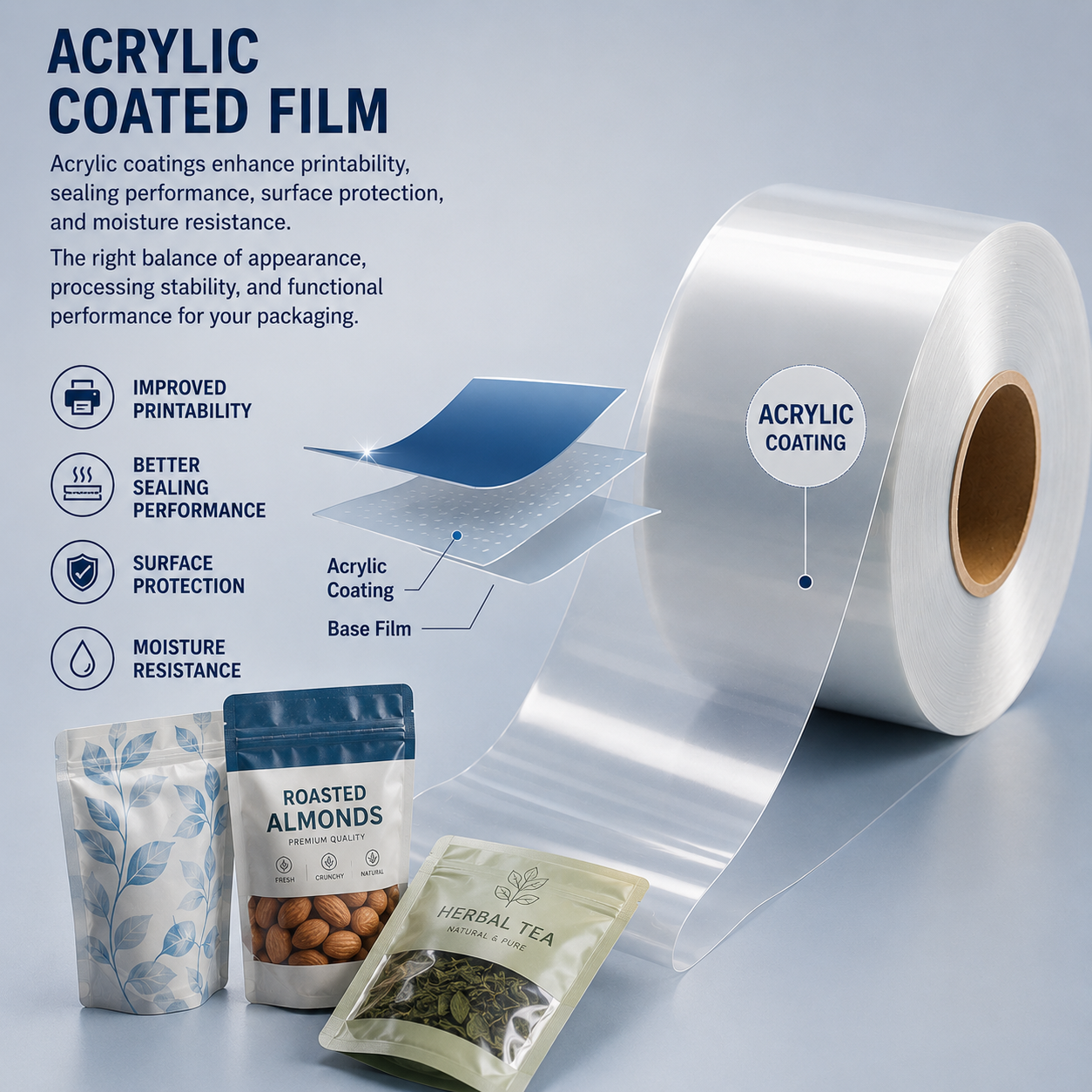
Improves printability, sealing, surface protection, and moisture resistance while supporting stable converting and a clean appearance.
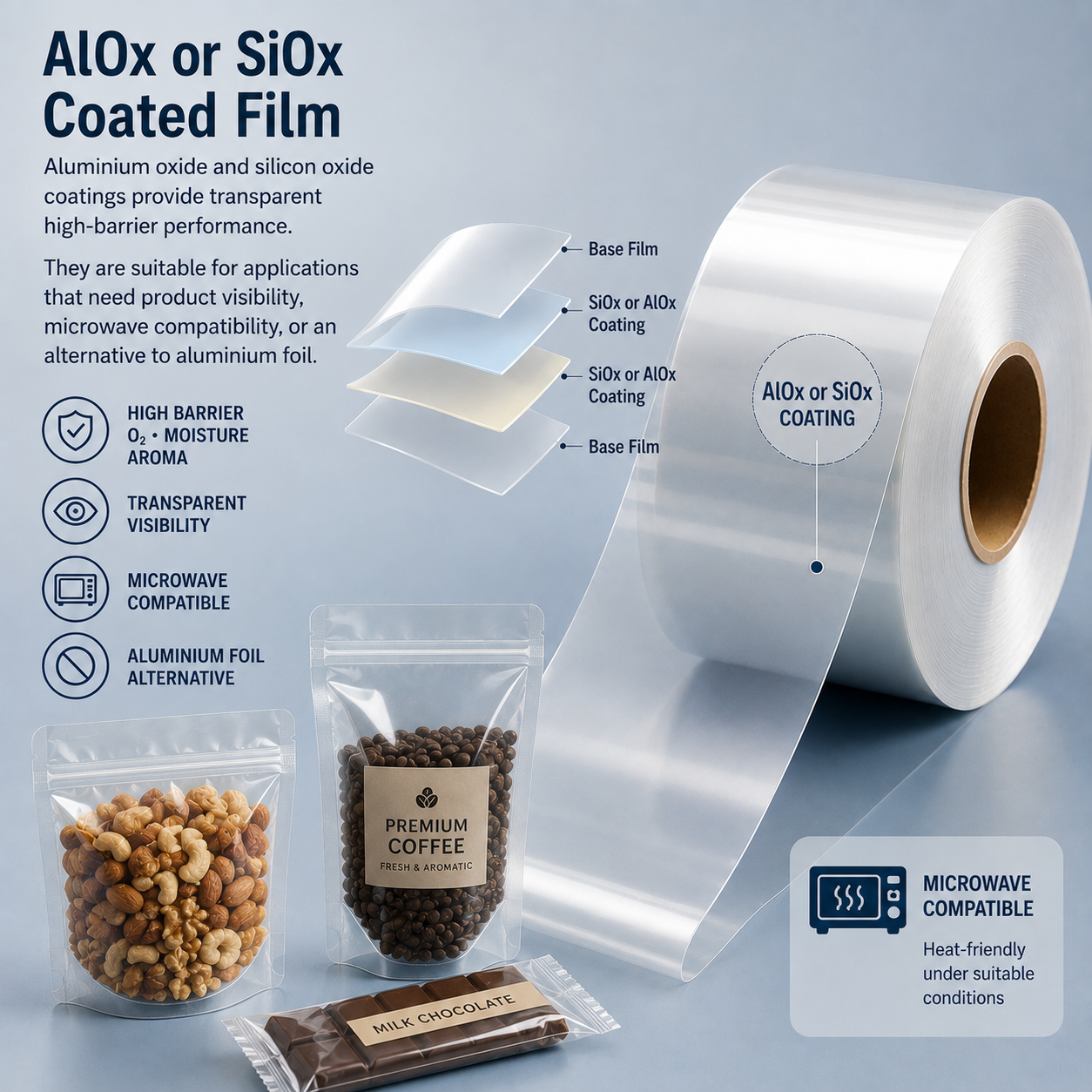
Provides transparent high-barrier performance for applications requiring product visibility, microwave use, or an aluminium-foil alternative.
Base Film Options
The coating is only one part of the structure. The base film also affects stiffness, transparency, heat resistance, sealing, puncture resistance, and machine performance.
Common base film options include:
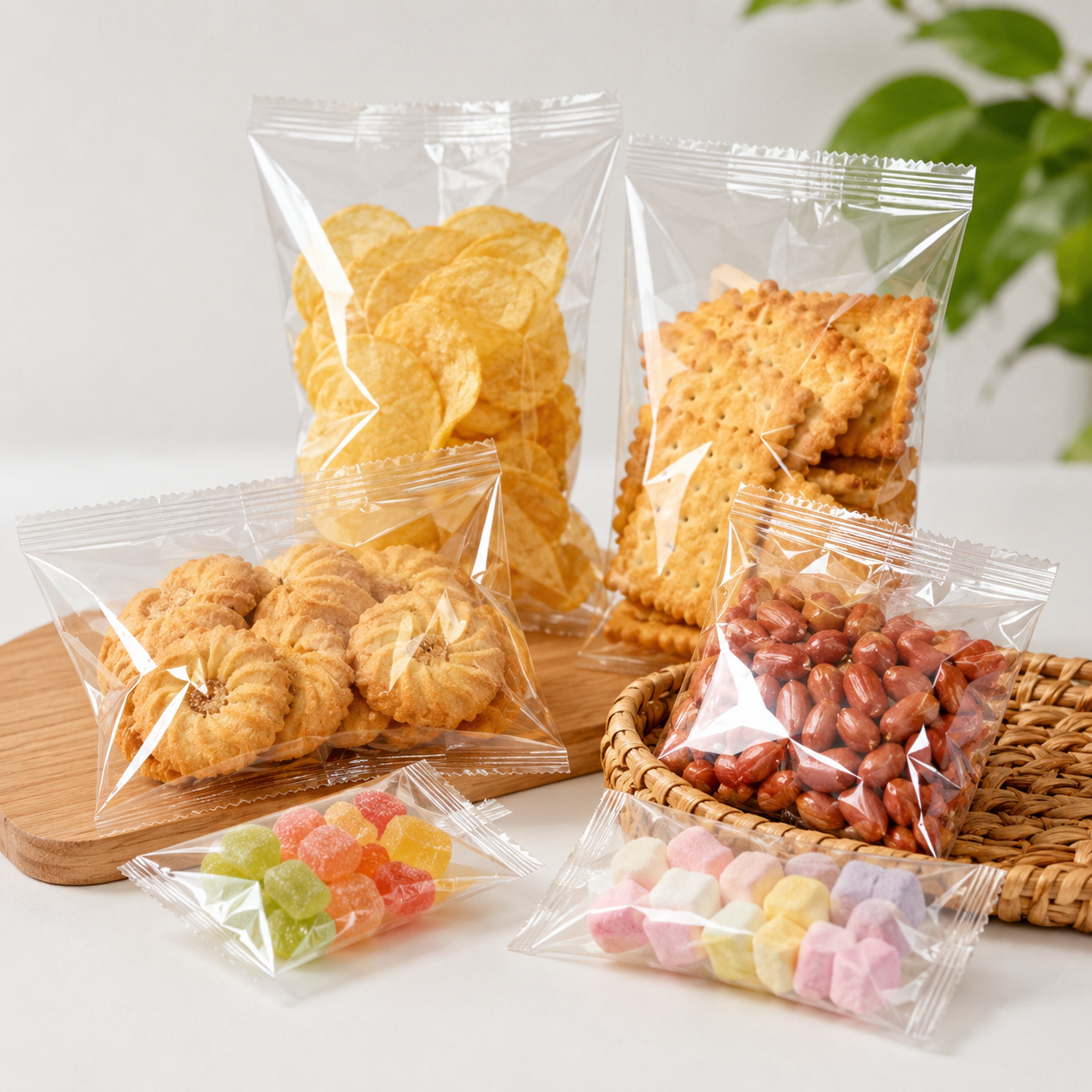
Suitable for clear packaging, labels, snacks, confectionery, and general food applications.
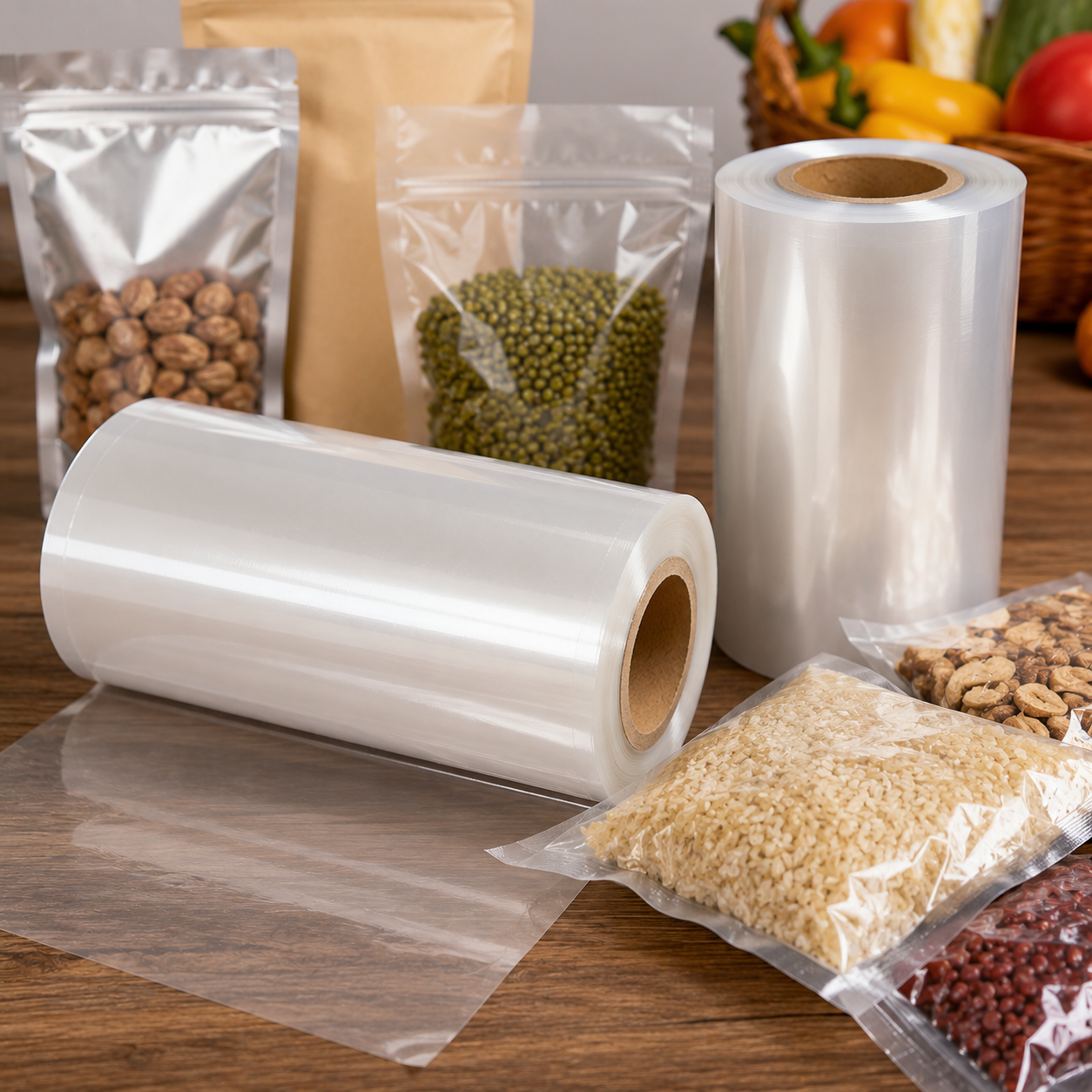
Provides good dimensional stability, heat resistance, printability, and mechanical strength.
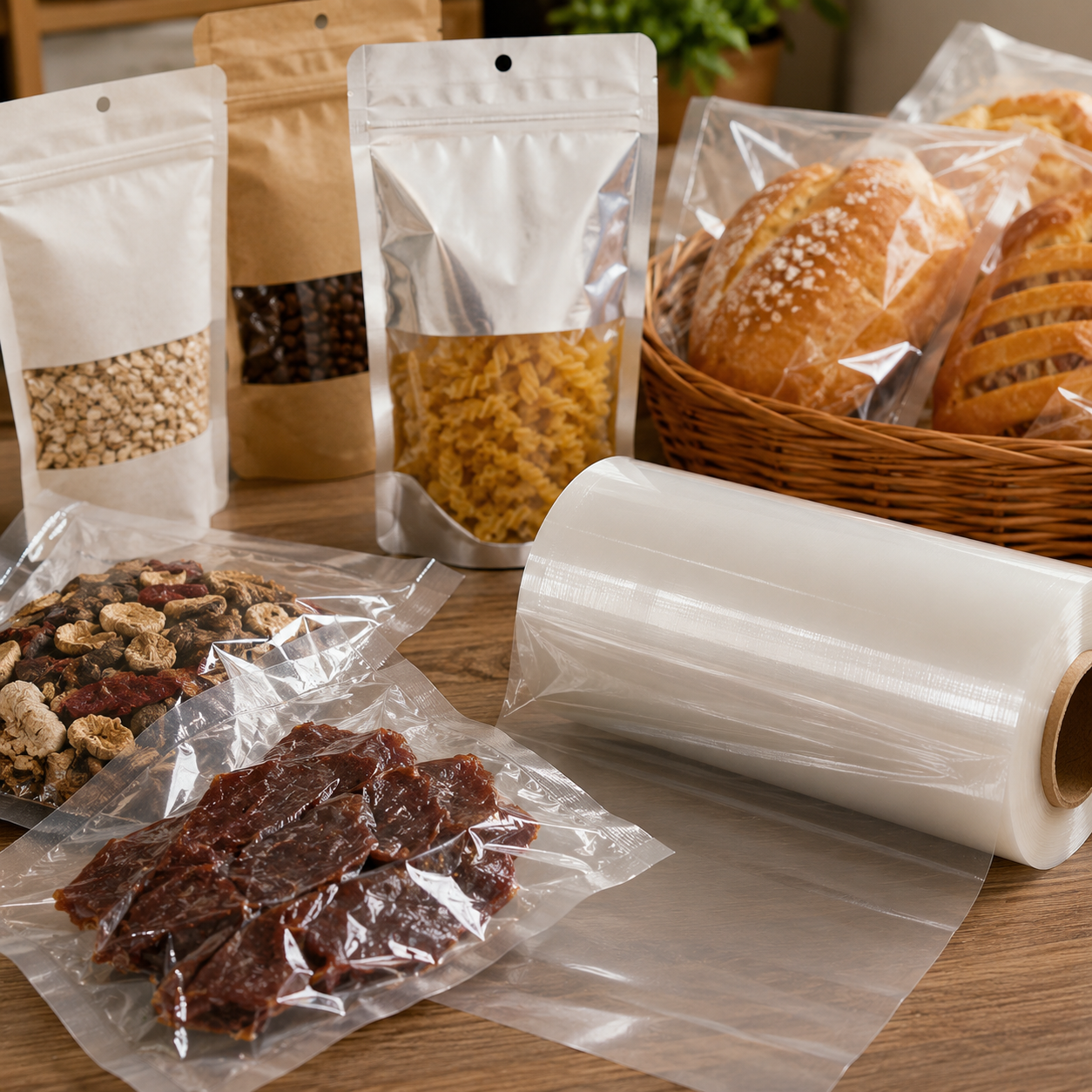
Suitable for products requiring puncture resistance, flex-crack resistance, and stronger mechanical performance.
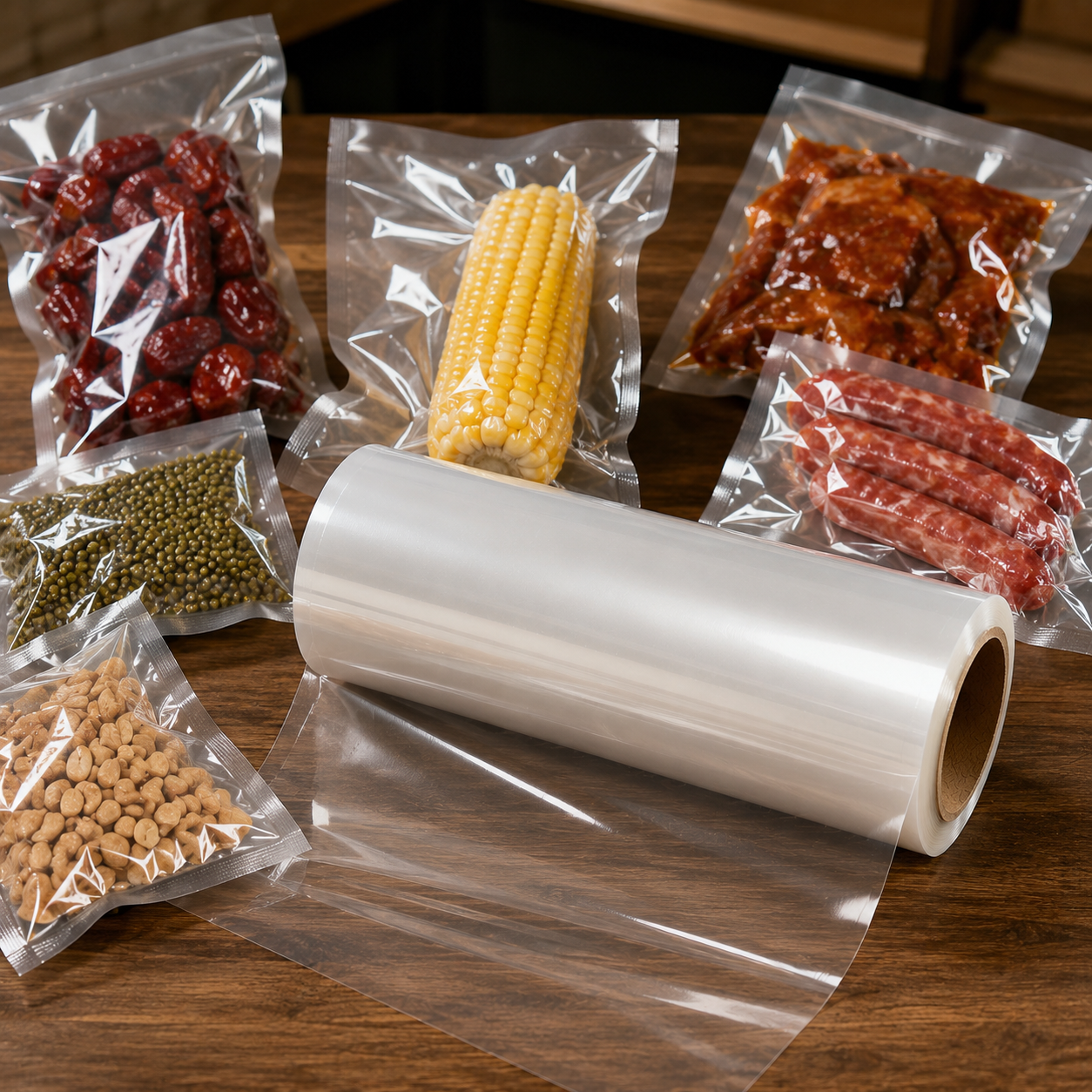
Suitable for heat-sealable packaging and applications requiring good clarity and flexibility.
Applications of High Barrier Coated Film
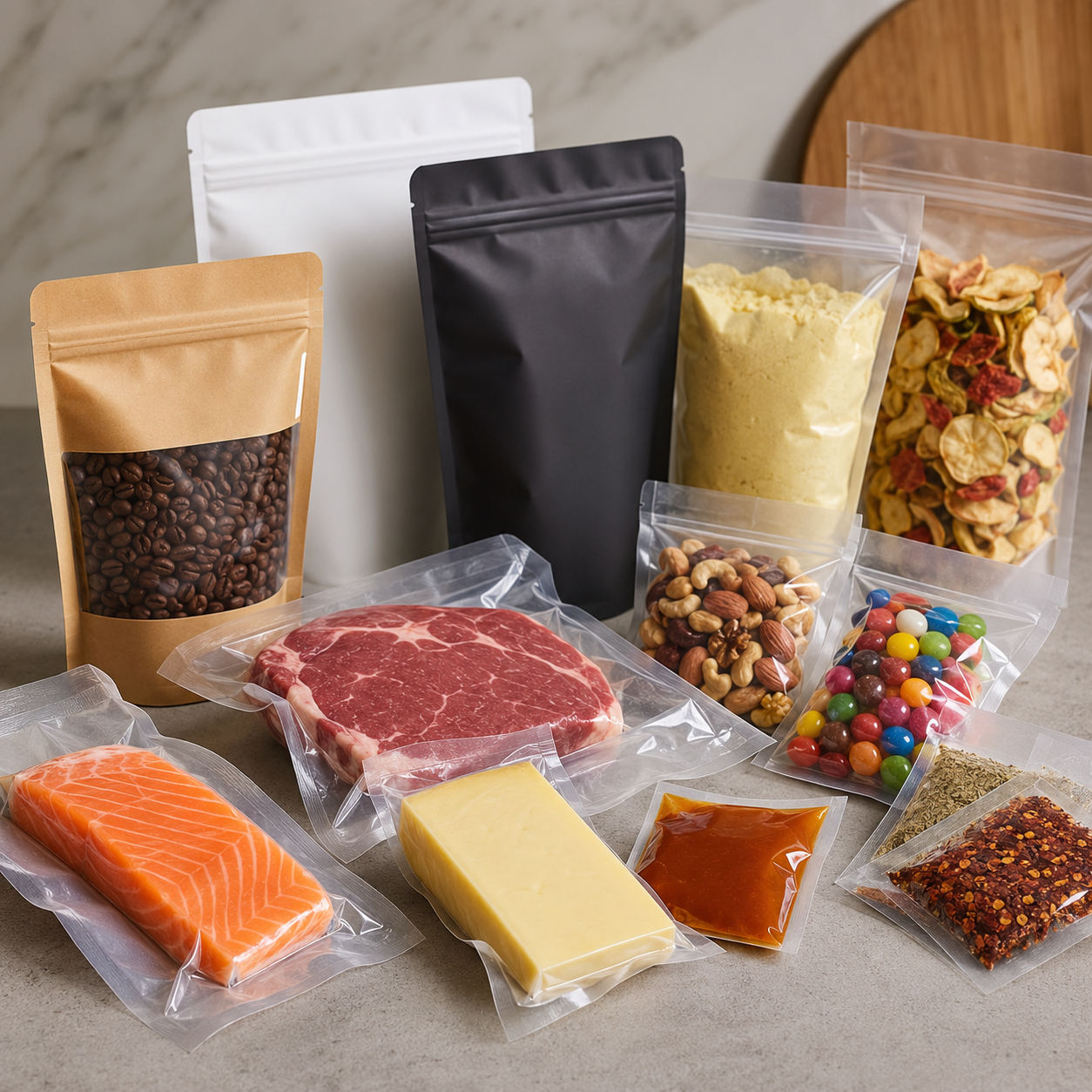 Food Packaging
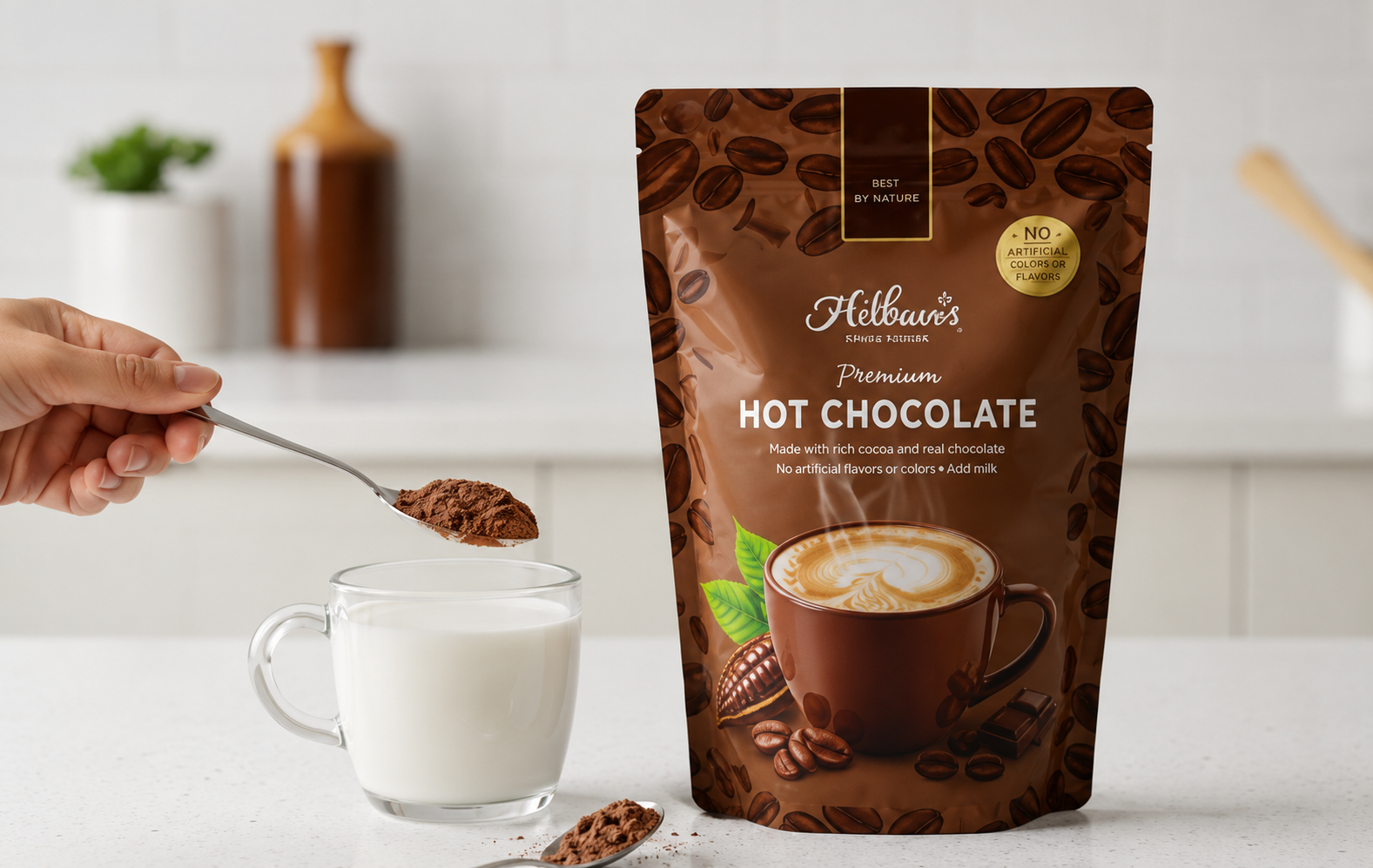
You can better protect freshness, flavour, colour, and texture in products such as coffee, meat, cheese, snacks, sauces, and powders. The right barrier structure helps reduce oxidation, moisture damage, and aroma loss throughout storage and distribution.
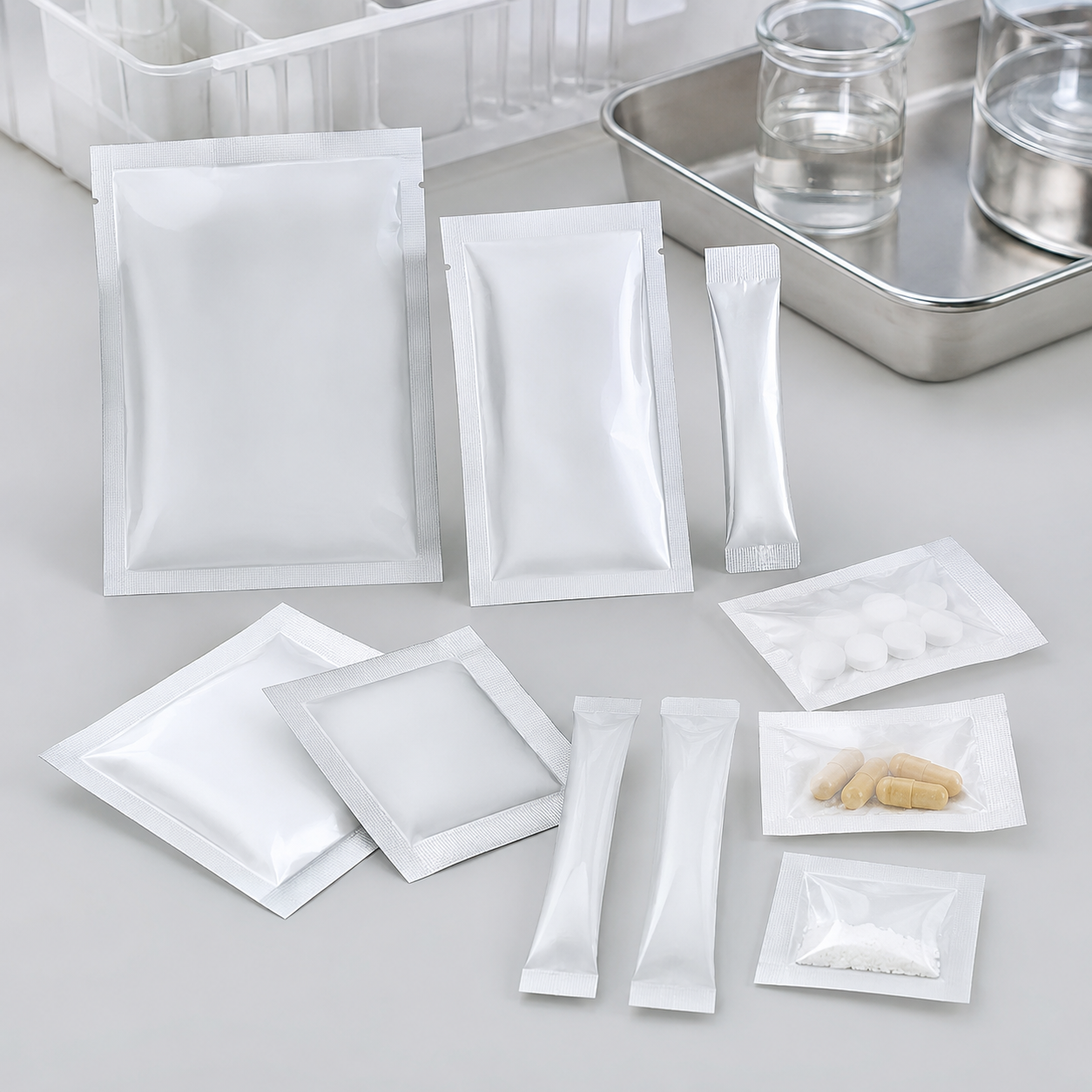 Pharmaceutical Packaging
You can improve protection against moisture, oxygen, aroma loss, and selected chemical exposure. This helps keep sensitive products more stable while supporting cleaner storage, safer handling, and more reliable performance over the required shelf life.
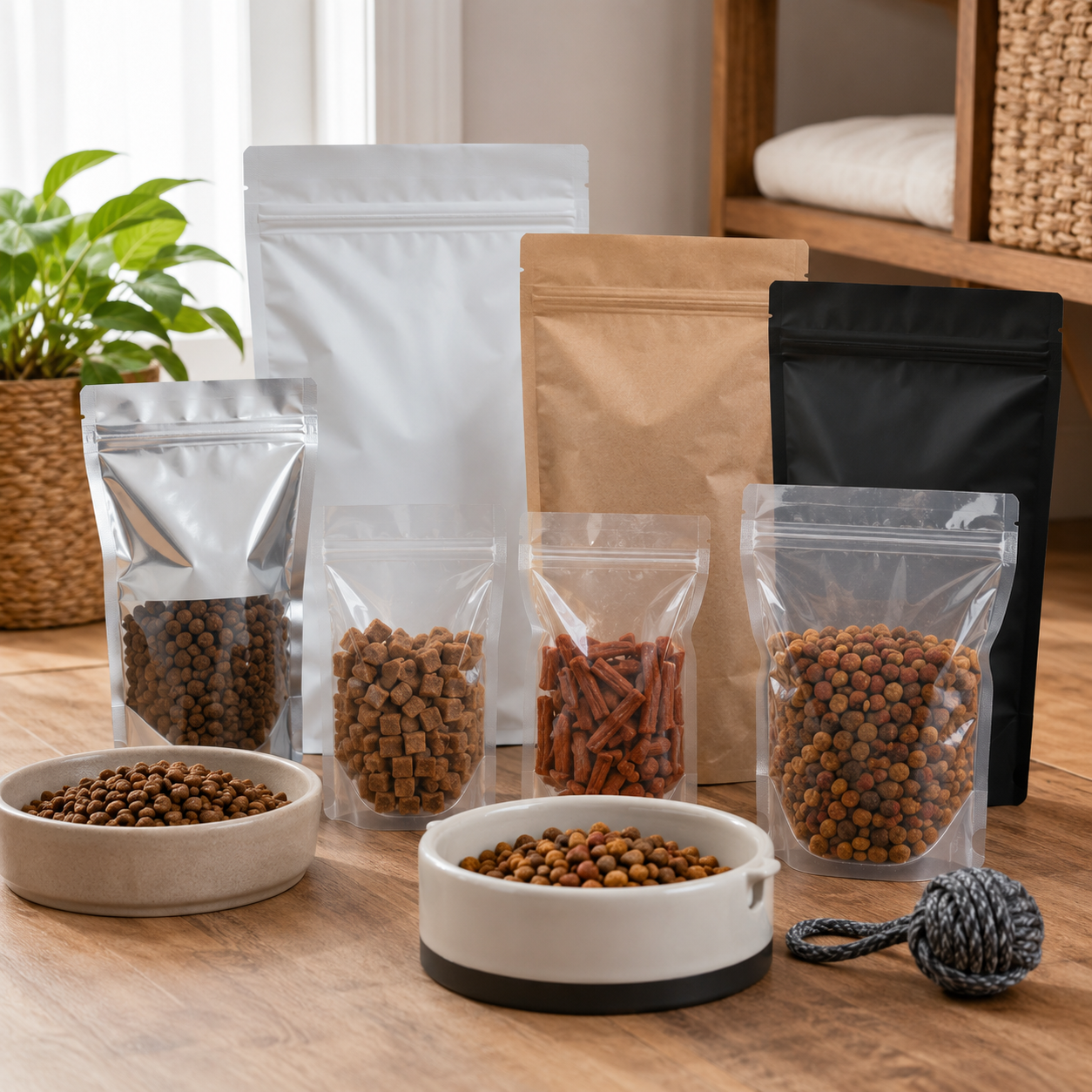 Pet Food Packaging
You can better preserve oils, flavour, aroma, and nutritional quality in dry food, treats, and supplements. Improved barrier protection also helps reduce quality loss during long storage periods, warehouse handling, and international transportation.
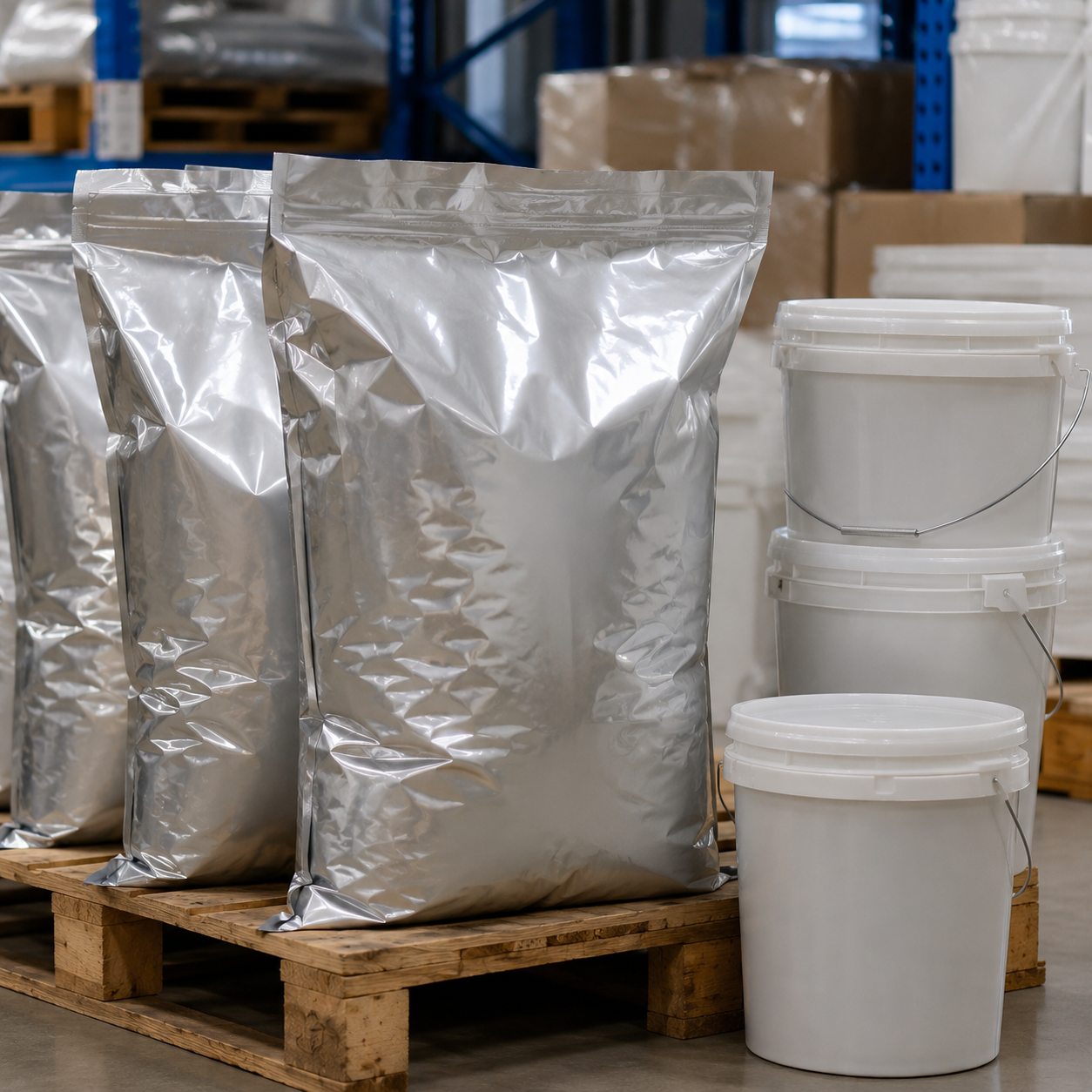 Chemical Packaging
You can protect selected powders, additives, and industrial products from moisture, grease, and unwanted chemical interaction. A suitable coated structure helps reduce contamination risks, improve storage stability, and keep the packaging more reliable during handling and transport.
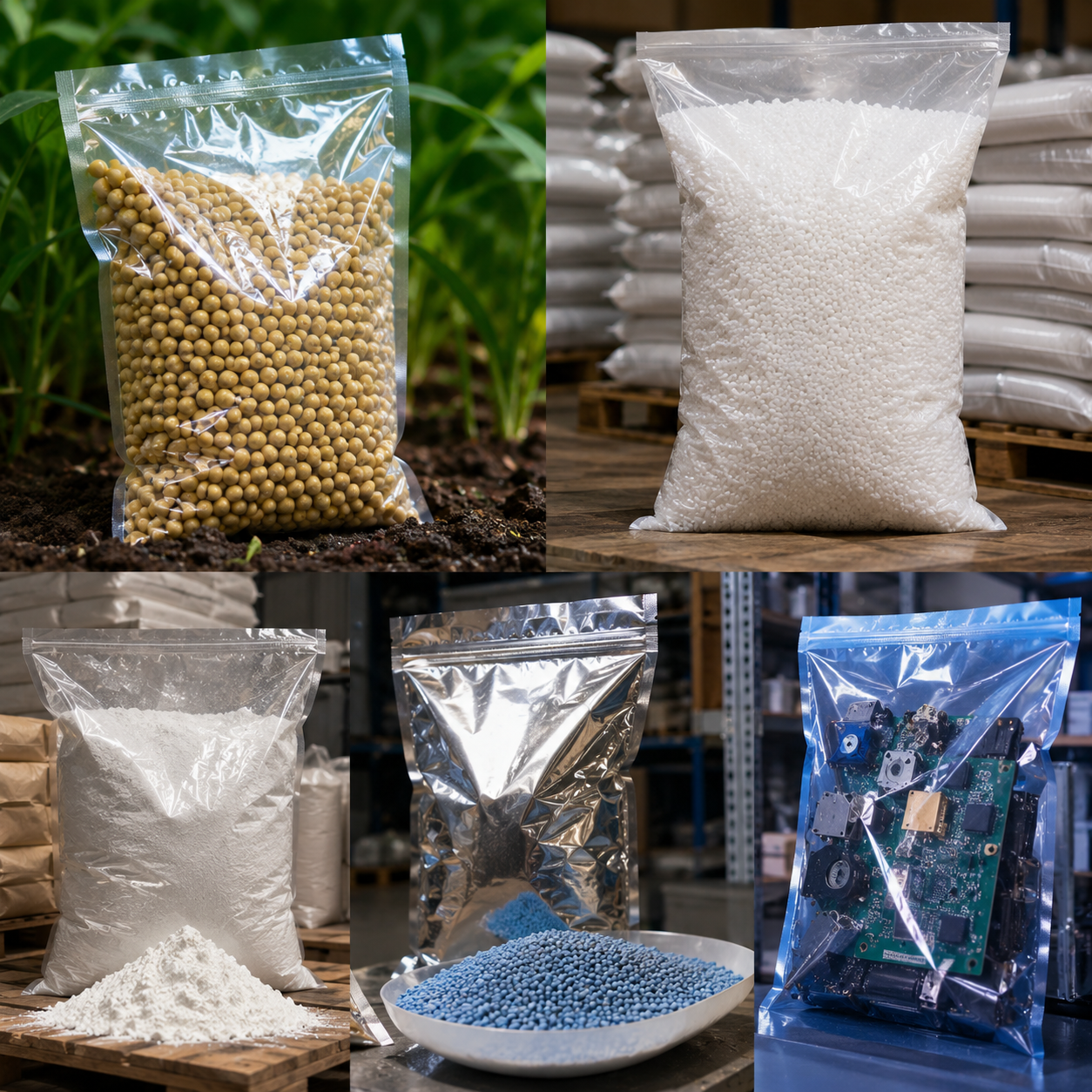 Agricultural and Industrial Packaging
You can protect seeds, fertilizers, resins, additives, and electronic materials from humidity, oxygen, and other environmental exposure. This helps reduce caking, corrosion, degradation, and performance loss before the product reaches your customer.
High Barrier Coated Film Designed Around Your Product

Helps reduce oxygen transmission and protects oxygen-sensitive products from oxidation, flavour loss, colour change, and quality deterioration.

Reduces water vapour transmission to help keep powders, snacks, dry foods, pharmaceuticals, and industrial materials stable during storage.

Helps preserve coffee, spices, pet food, flavourings, and other aroma-sensitive products by reducing aroma loss through the packaging.

Suitable for products containing oil, fat, grease, or active ingredients that may affect conventional film structures.

Provides improved product protection while maintaining product visibility, making it suitable for applications where aluminium foil is not preferred.

The film can be adjusted for printing, lamination, heat sealing, bag making, slitting, and automatic packaging equipment.
High Barrier, Built to Your Specs
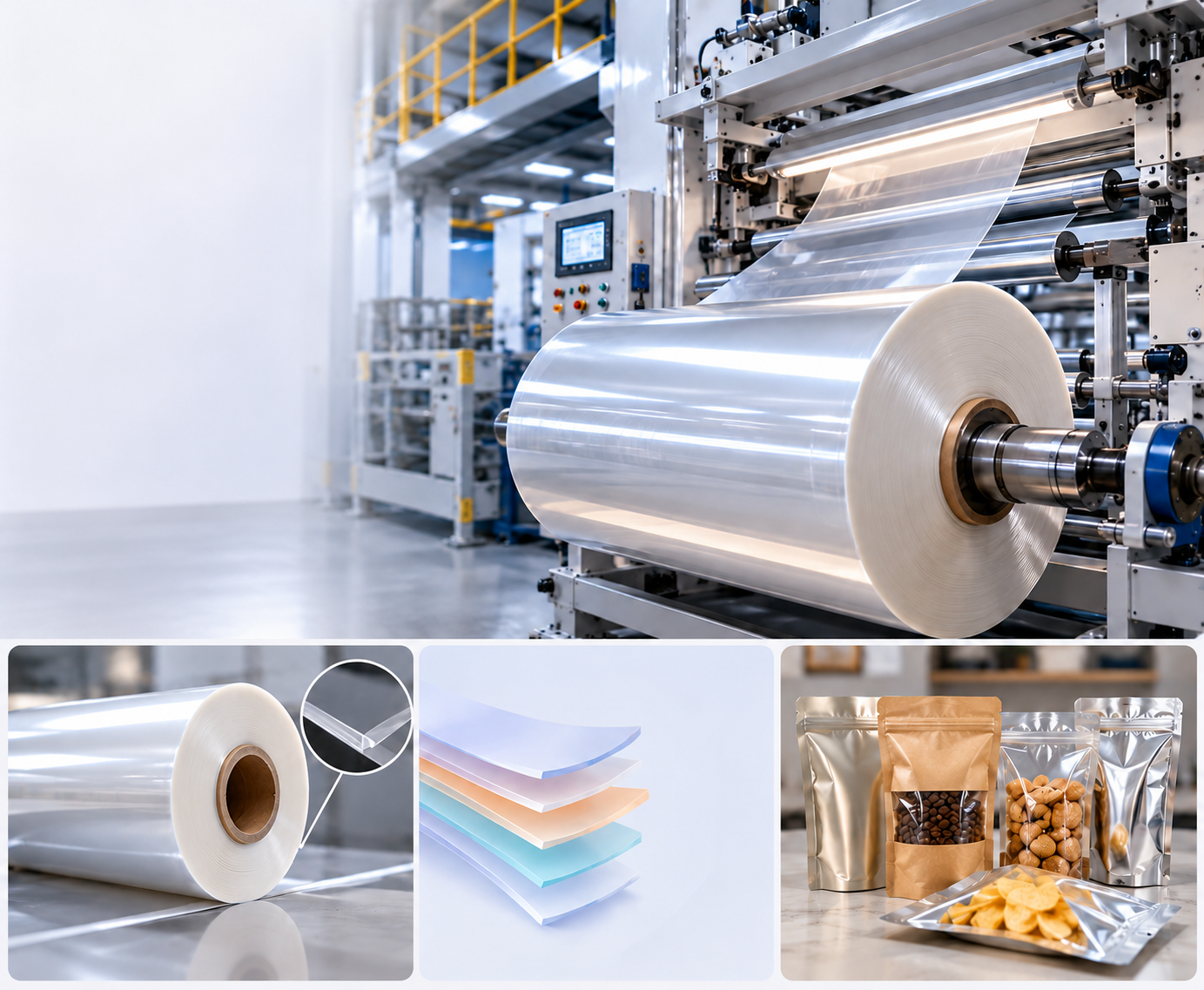
We apply PVA and PVDC coatings to different base films to improve oxygen and moisture barrier performance. The coating structure can be adjusted to match your packaging use, required barrier level, and later printing or lamination process.
- Base film thickness: 12–50 μm
- Maximum coating width: 1,300 mm
- OTR: as low as 4 cc/m²/24 h
- WVTR: as low as 2 g/m²/24 h
- Suitable for printed, laminated, and high-barrier packaging structures
Using 28 μm OPP as an example, the finished thickness after coating is about 31 μm, while the oxygen and moisture barrier can be greatly improved. Actual results depend on the base film, coating type, structure, and test conditions.
Grease Protection That Stays Clean
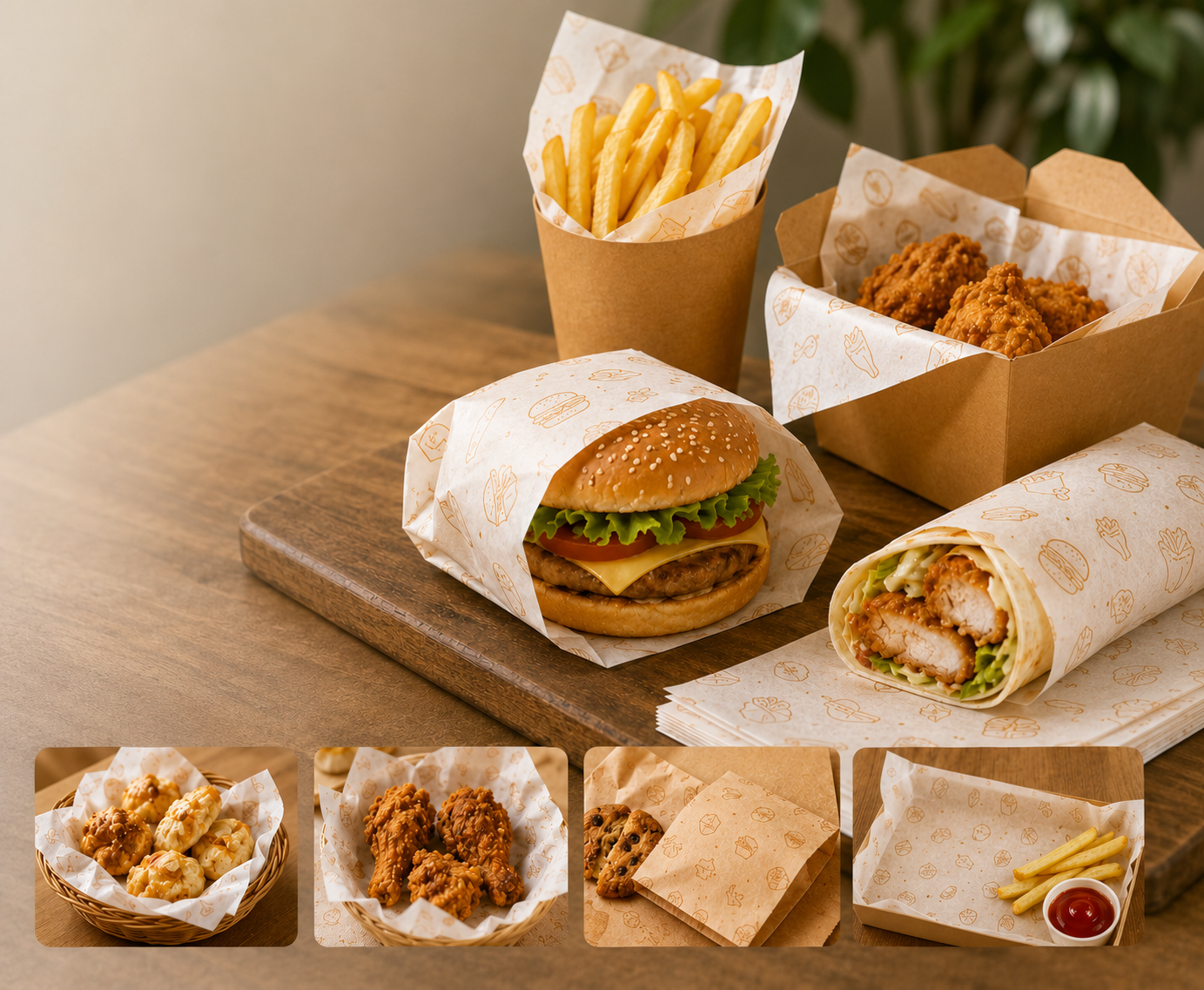
Our barrier coating technology can also be applied to food-grade paper, helping you reduce oil and moisture penetration in wrapping, tray liners, takeaway, and delivery packaging.
You get cleaner outer packaging, fewer grease stains, and a more presentable food experience. Paper weight, size, grease resistance, and printing can be customized for your application.
- Helps block oil and moisture
- Reduces stains and leakage
- Suitable for direct food contact
- Available with custom printing
- Multiple paper weights and sizes
Why Work With EHAI Packaging?
Support From Material Selection to Final Packaging
You are not only buying a coated film. You can work with one team through material selection, sampling, production, converting, and final delivery, making the whole project easier to manage.
Key Points
- Clear technical communication before production
- Samples available for testing and machine trials
- Quality checks based on confirmed specifications
- Flexible support for both trial orders and repeat orders
- Faster coordination when specifications or delivery plans change
One-side coating is suitable for most laminated packaging because it provides barrier protection without adding unnecessary coating or cost. Double-side coating is normally selected only when both surfaces need a specific function or extra protection.
It can, depending on the coating type and surface treatment. Please tell us your printing method, ink system, adhesive, and lamination process so we can check compatibility before production.
Yes. Trial rolls can be prepared for printing, lamination, slitting, sealing, and machine testing. Testing the complete process is recommended before confirming a large order.
Please provide the film width, roll length or weight, core diameter, maximum roll diameter, winding direction, coated side, and any roll-weight limits required by your equipment.
Store the rolls in a clean, dry area away from direct sunlight, high humidity, and extreme temperatures. Keep the original packaging sealed until use to protect the coating surface.
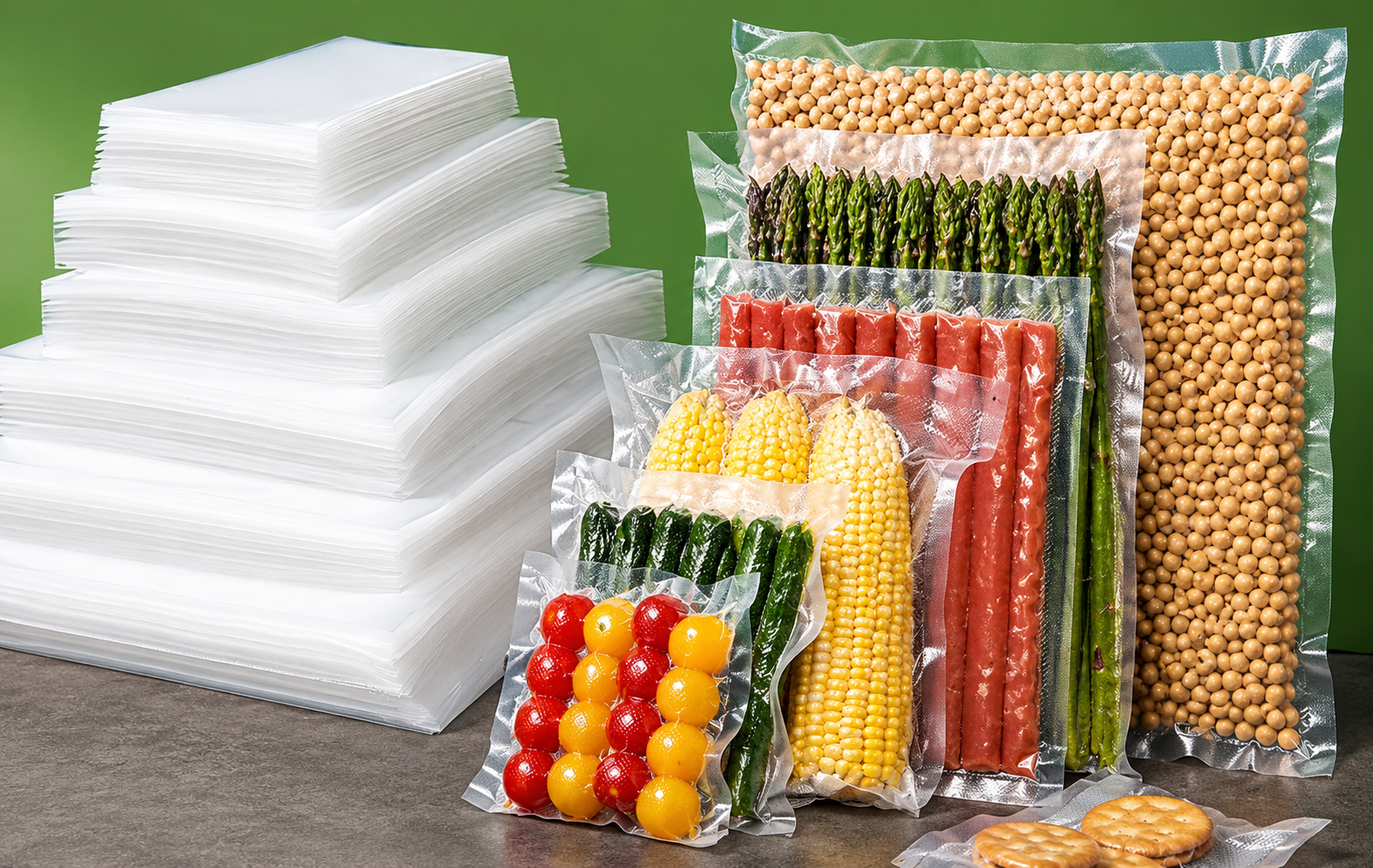
Repeated bending, creasing, or rough handling may damage some barrier coatings. For packaging that will be folded, vacuum packed, or heavily handled, flex resistance should be tested using the finished laminate.
After delivery, keep the rolls sealed in a cool, dry place, avoid direct sunlight and heavy stacking, and allow cold rolls to reach room temperature before opening and processing.