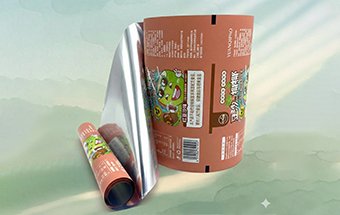

Your Surface Finish Shapes the First Impression
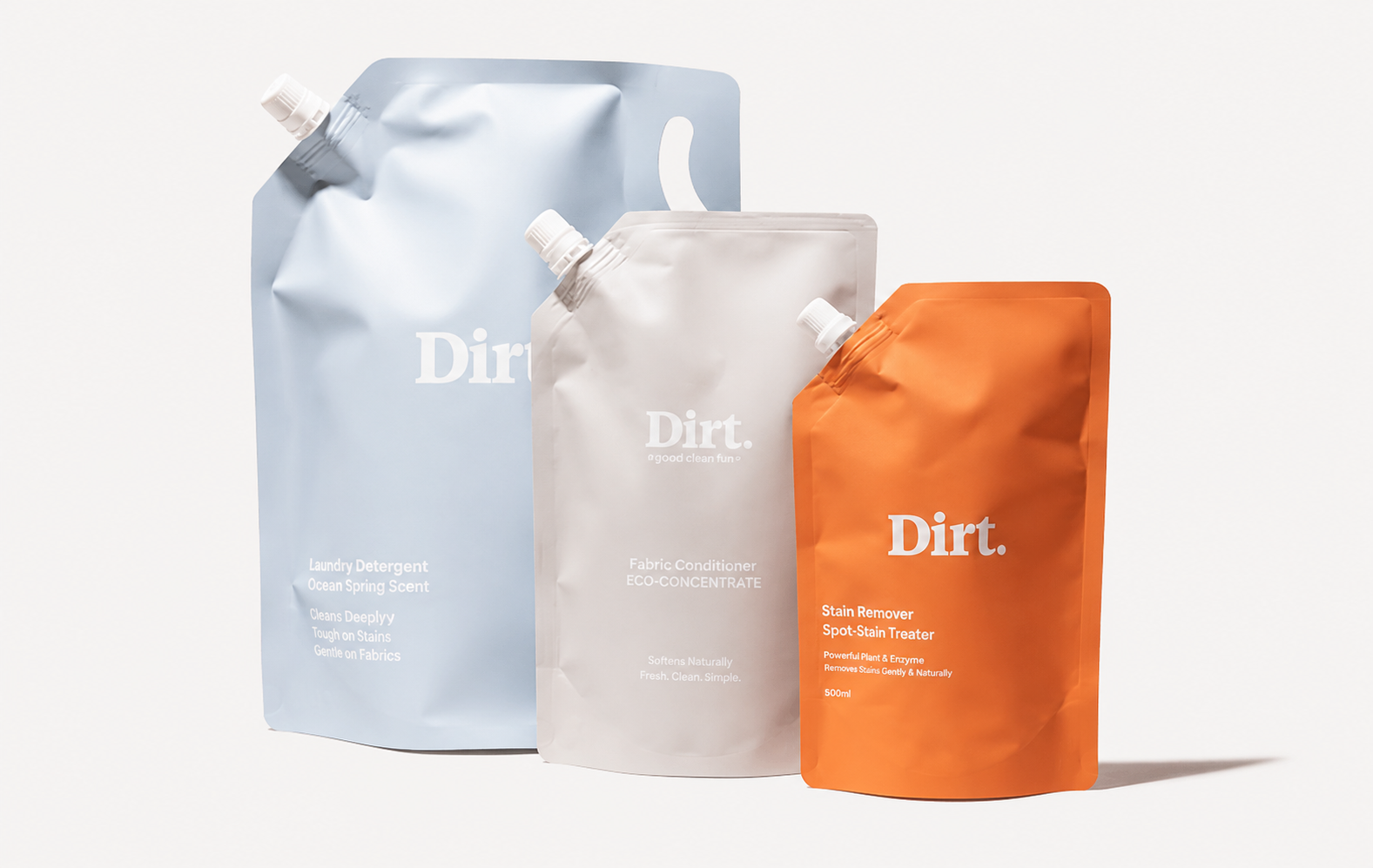
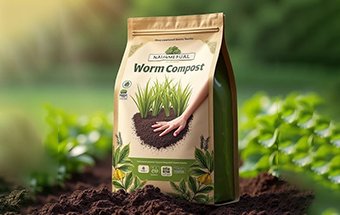
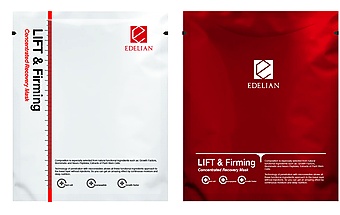
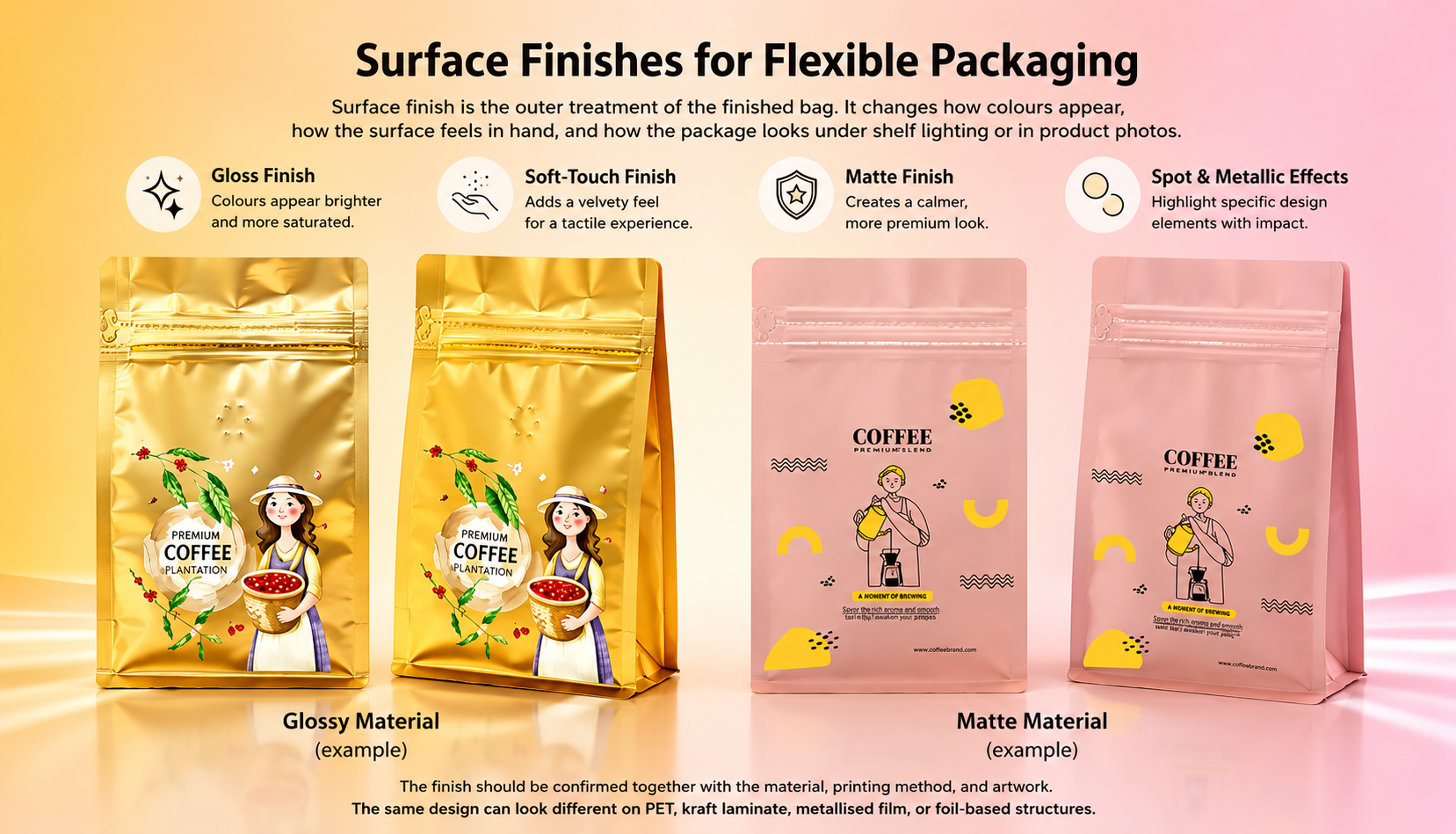
Surface finish is the outer treatment of the finished bag. It changes how colours appear, how the surface feels in hand, and how the package looks under shelf lighting or in product photos.
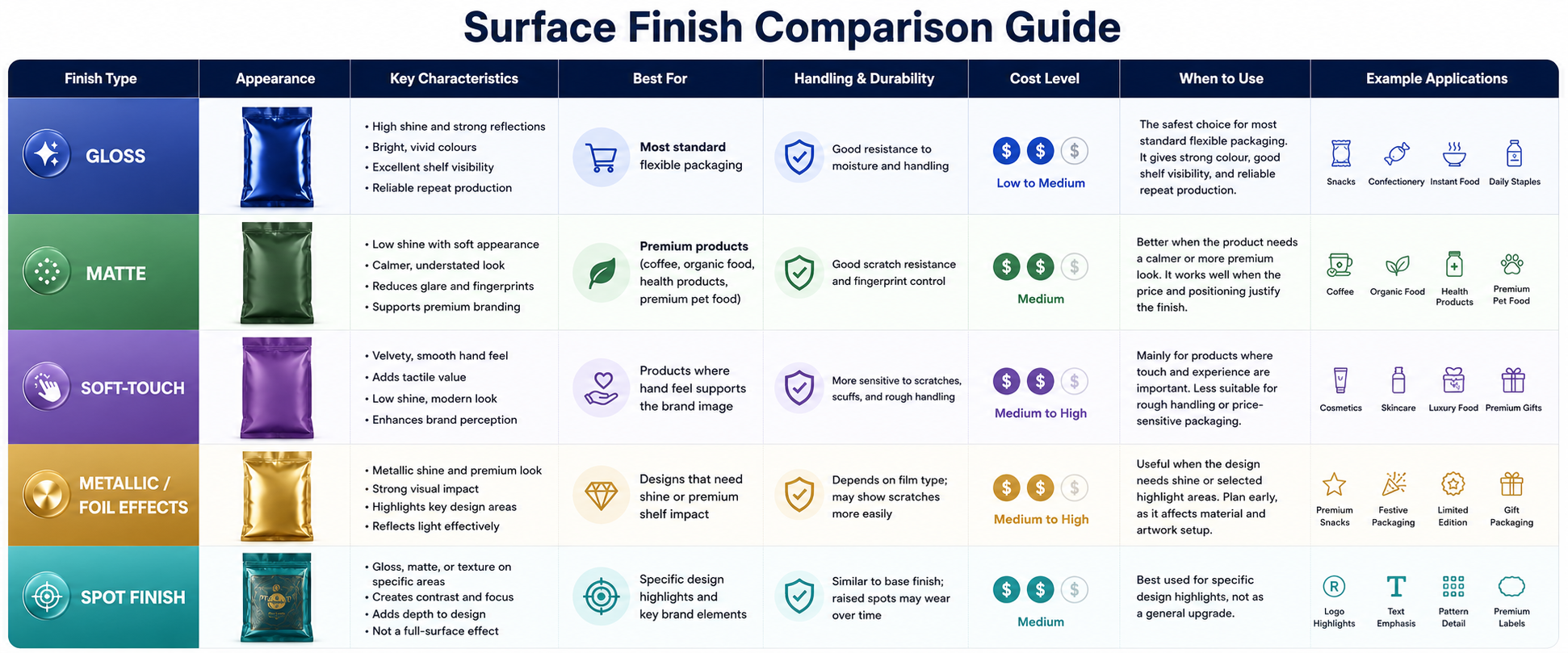
A gloss finish can make colours look brighter and more saturated. Matte can create a calmer, more premium look. Soft-touch adds a tactile feel, while metallic or spot effects can highlight selected design elements.
The finish should be confirmed together with the material, printing method, and artwork. The same design can look different on PET, kraft laminate, metallised film, or foil-based structures.
Before You Confirm a Surface Finish
Before confirming the finish, check whether it matches the product positioning, artwork colour, material structure, printing method, and handling conditions.
A physical reference sample is more reliable than a screen description. If you need to match a previous supplier’s bag, a competitor sample, or a specific matte or gloss effect, sending a real sample can reduce misunderstanding.
For repeat orders, finish consistency also matters. Standard gloss and matte are usually easier to keep stable across batches, while soft-touch, spot finish, or special effects may need more careful confirmation.
Match the Finish to Your Product Positioning
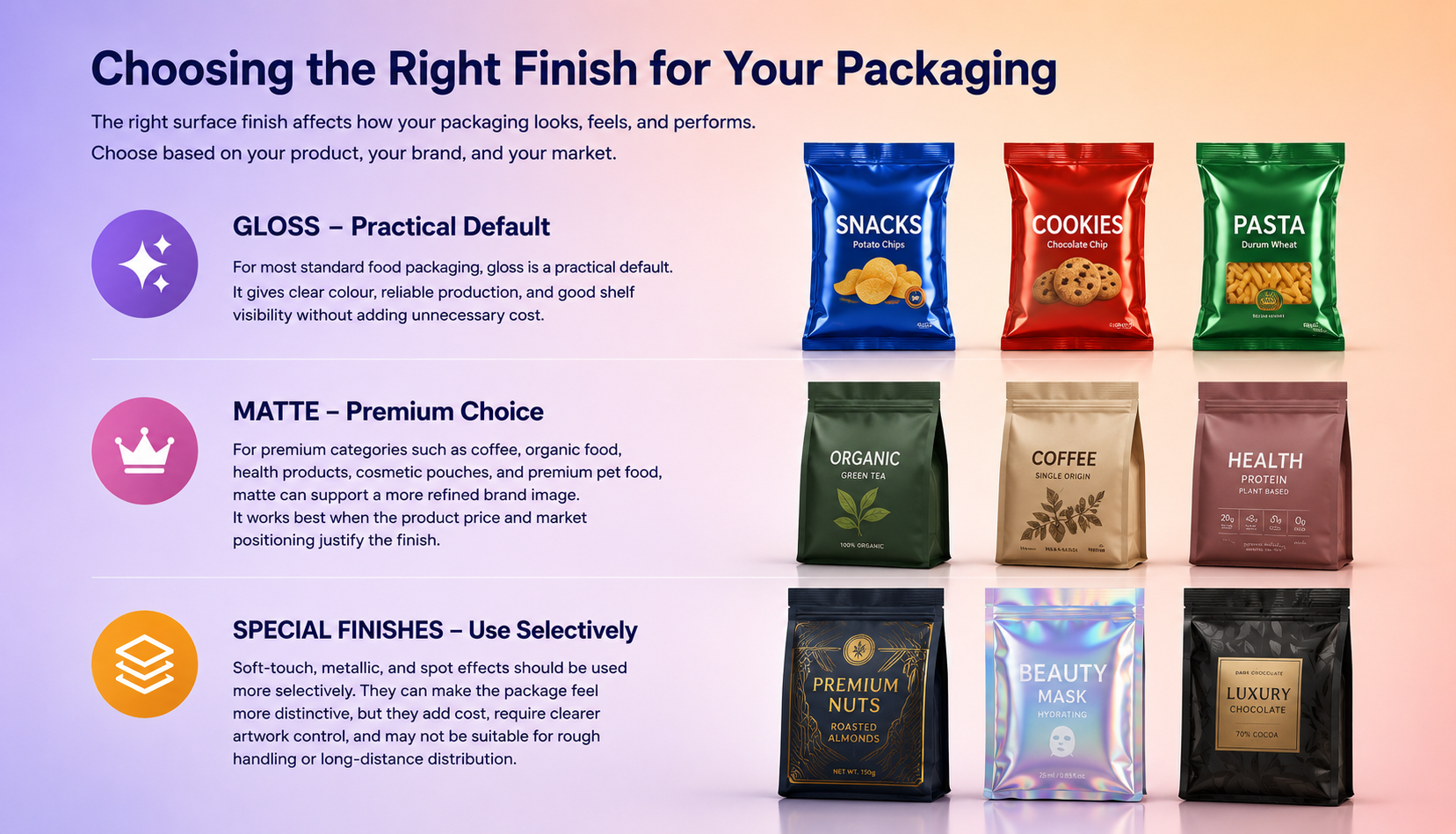
For most standard food packaging, gloss is a practical default. It gives clear colour, reliable production, and good shelf visibility without adding unnecessary cost.
For premium categories such as coffee, organic food, health products, cosmetic pouches, and premium pet food, matte can support a more refined brand image. It works best when the product price and market positioning justify the finish.
Soft-touch, metallic, and spot effects should be used more selectively. They can make the package feel more distinctive, but they add cost, require clearer artwork control, and may not be suitable for rough handling or long-distance distribution.
Common Surface Finish Options
Gloss is the standard finish for most flexible packaging bags. It reflects light, makes colours look brighter, and gives the pack a clean shelf appearance.
It works well for snacks, dry food, frozen food, sauces, daily-use products, and most standard retail packaging. It is also reliable for repeat production and does not usually add extra finish cost.
Choose gloss when you want a practical, clear, and cost-effective finish.
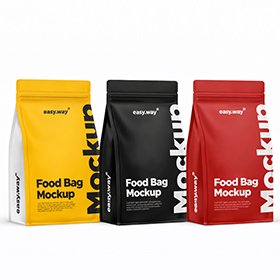
Matte finish gives the bag a flat, non-reflective surface. It makes the package look quieter and more premium, but colours may appear less bright than they do under gloss.
It is often used for coffee, organic food, health products, premium pet food, cosmetic pouches, and brands that want a softer shelf image.
Before choosing matte, consider fingerprint marks, scuff visibility on dark colours, and the added cost compared with standard gloss.
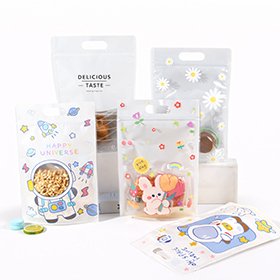
Soft-touch finish creates a smooth, velvety hand feel. It is mainly used when touch is part of the product experience, not just for decoration.
It can suit premium confectionery, speciality coffee, personal care packaging, and selected gift or lifestyle products.
Because soft-touch can show scuffing more easily, it is better for controlled distribution than rough handling, bulk packing, or long-distance transport.
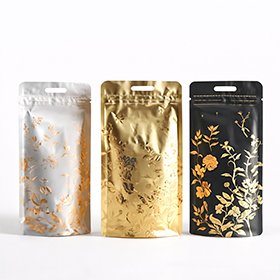
Metallic effects can come from metallised film, foil-based material, or applied foil stamping. They are used to create shine, highlight logos, or give the package a more premium visual effect.
Metallised film is often more practical for larger reflective areas. Foil stamping is better for selected details such as logos, icons, or feature panels.
These effects should be confirmed early because they affect material choice, artwork setup, cost, and lead time.
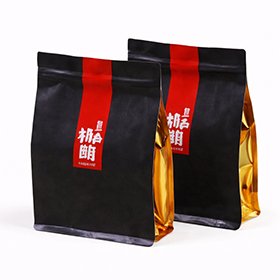
Spot finish applies gloss, matte, or another effect only to selected areas. It can highlight a logo, product name, certification mark, or key design element.
It creates contrast between different surface areas, but it also requires accurate registration between the finish layer and the printed artwork.
Use spot finish when the effect has a clear design purpose. For general decoration, the added production complexity may not be worth it.
Gloss is the default. If you don’t specify otherwise, the bag comes with standard gloss. Most products don’t need anything beyond that.
For premium coffee, speciality food, or high-end pet products — often yes. For standard commodity products, it usually doesn’t change any commercial outcome. It depends on what the product positioning actually calls for.
It can. Soft-touch surfaces scuff and mark more visibly than standard matte or gloss, particularly in rough handling or long transit. Worth considering before specifying it for products with demanding distribution conditions.
Yes — that’s spot finishing. It requires an additional production step and precise registration. We’d advise it when it serves a specific design purpose. As a general decorative addition, the complexity usually isn’t justified.
Matte over a metallised base mutes the reflectivity. Gloss enhances it. The combination affects how the metallic base reads, so it’s worth confirming with a sample if this matters to the design.
Standard gloss and matte are consistent in normal production conditions. Specialised finishes — particularly soft-touch — can have more run-to-run variation. If consistency across batches is important, raise it when the specification is confirmed.
No. The finish is on the exterior of the bag and doesn’t contact the product. The inner sealant layer handles that.
Yes. If you’re comparing gloss and matte, we can provide physical samples. Finish decisions are much easier to confirm in hand than from a screen description.